- The Breakdown
- Posts
- 🟪 DAS NYC, Day 2



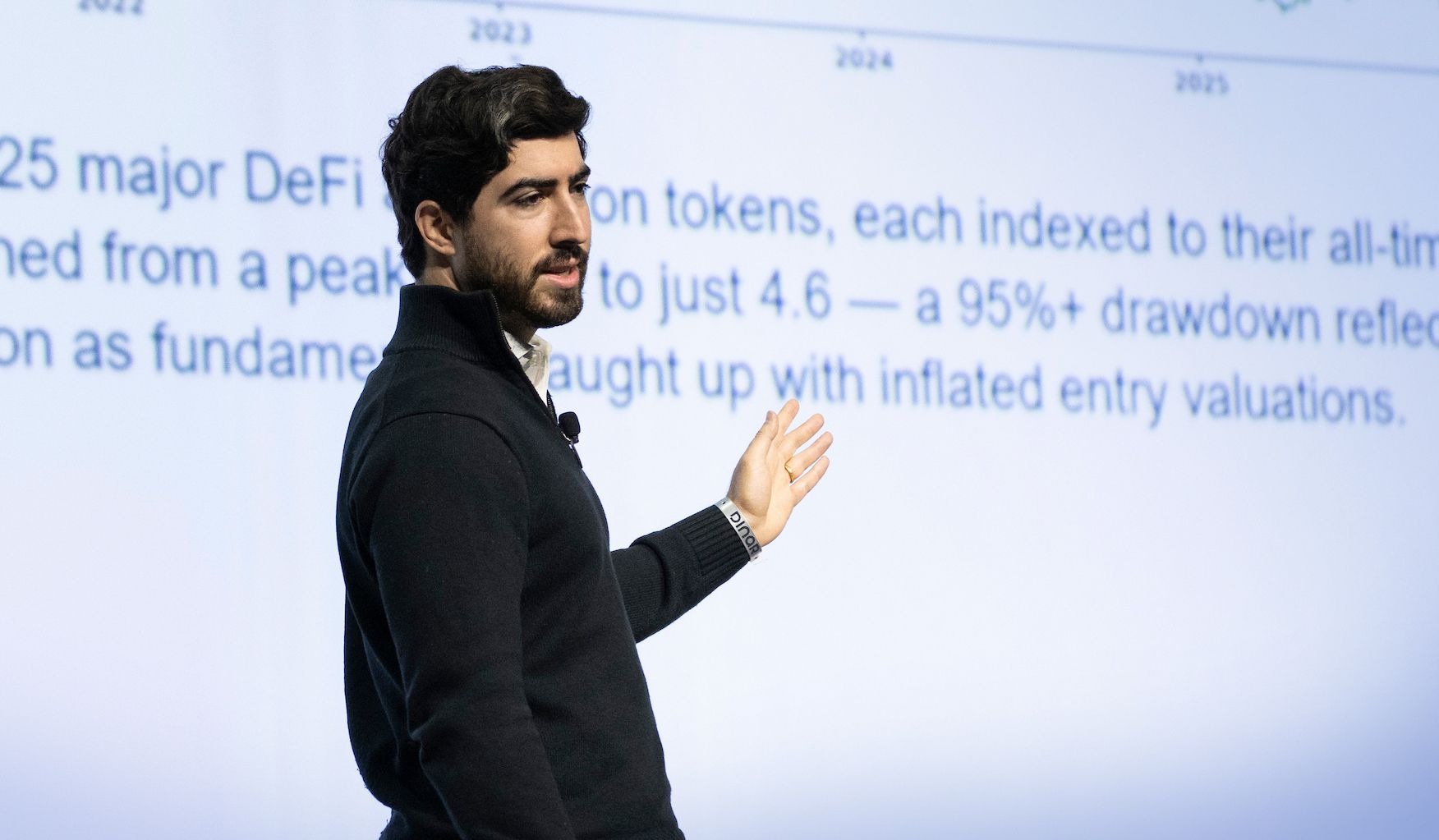
Felipe Montealegre | Mike Lawrence for Blockworks
DAS NYC, Day 2
Every self-respecting new technology needs a publication to extol its future greatness.
In 1895, it was The Horseless Age, a monthly trade journal dedicated to the nascent motor vehicle industry, which sold all of 4,000 units in the US that year.
Why would such a niche industry need its own magazine?
“The appearance of a journal devoted to a branch of industry yet in an embryonic state may strike some as premature,” The Horseless Age conceded in its very first article. “But those who have taken the pains to search below the surface for the great tendencies of the age, know what a giant industry is staggering into being there.”
This would-be giant didn’t even know what to call its product. Early issues of The Horseless Age debated whether this new form of transport should be called motor cars, horseless carriages, self-propelled carriages, autocars, or the French-inspired automobiles.
Modest as things were, The Horseless Age found that its audience of mechanics, inventors, engineers, parts-makers, and engine builders was attractive to advertisers. One of its first was the Daimler Motor Company, which took out a full-page ad touting the “gas, gasoline, or kerosene” motor vehicles it was building in a Long Island factory owned by Steinway.
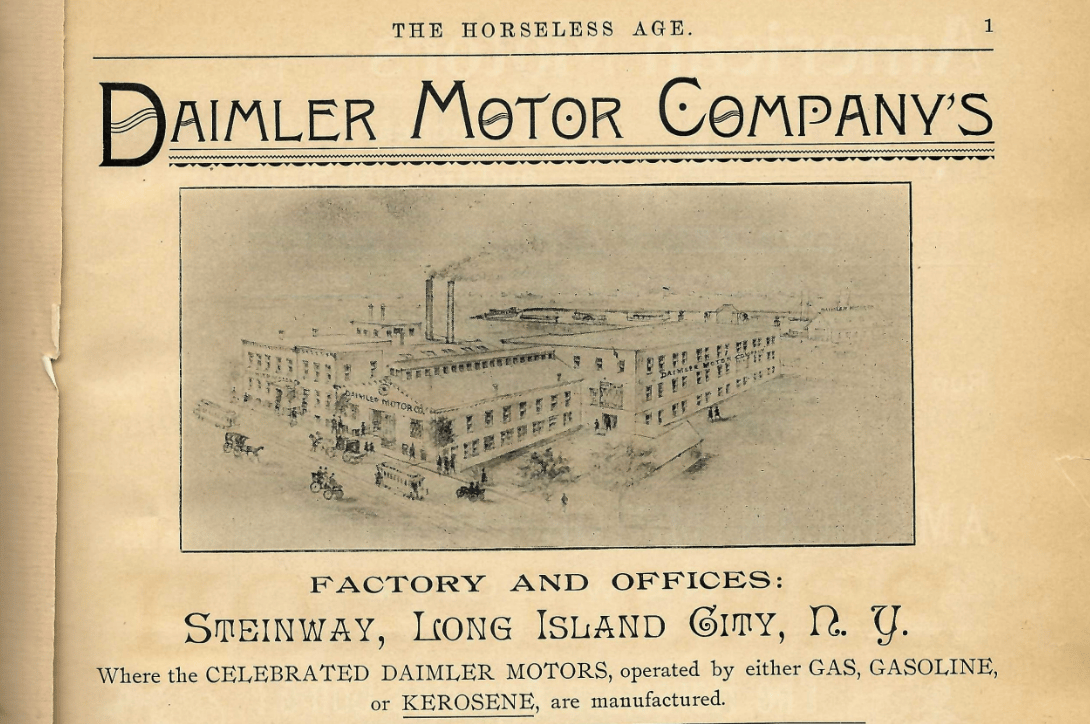
Yes, they built kerosene cars. And yes, they built them in a piano factory. It was an uncertain beginning.
Nevertheless, The Horseless Age was confident in the future of the automobile. “The growing needs of our civilization demand it; the public believe in it and await with lively interest its practical application to the daily business of the world.”
Just like crypto!
Ok, fine — the parallel is not exact. Today’s public does not exactly believe in crypto. Nor is it waiting with lively interest to discover its practical application.
But the banking public does believe.
That, at least, is the impression I get from DAS. Crypto remains approximately as niche as kerosene-powered motor vehicles. But crypto conferences are buzzing with interest.
That’s surprising to me, given how far token prices have fallen: Felipe Montealegre noted onstage today that a basket of the top 25 DeFi tokens are 95% off their 2021 highs.
He attributes that dismal performance, in part, to the “malinvestment” that followed from poor incentives (crypto’s history of narrative-driven prices). This discouraged builders from doing the hard work of figuring out what products people would really use.
But the motor vehicle industry once struggled with that as well. Consider, for example, the Ames Motor Cycle — a carriage bolted on top of two bicycles, each powered by steam motors:
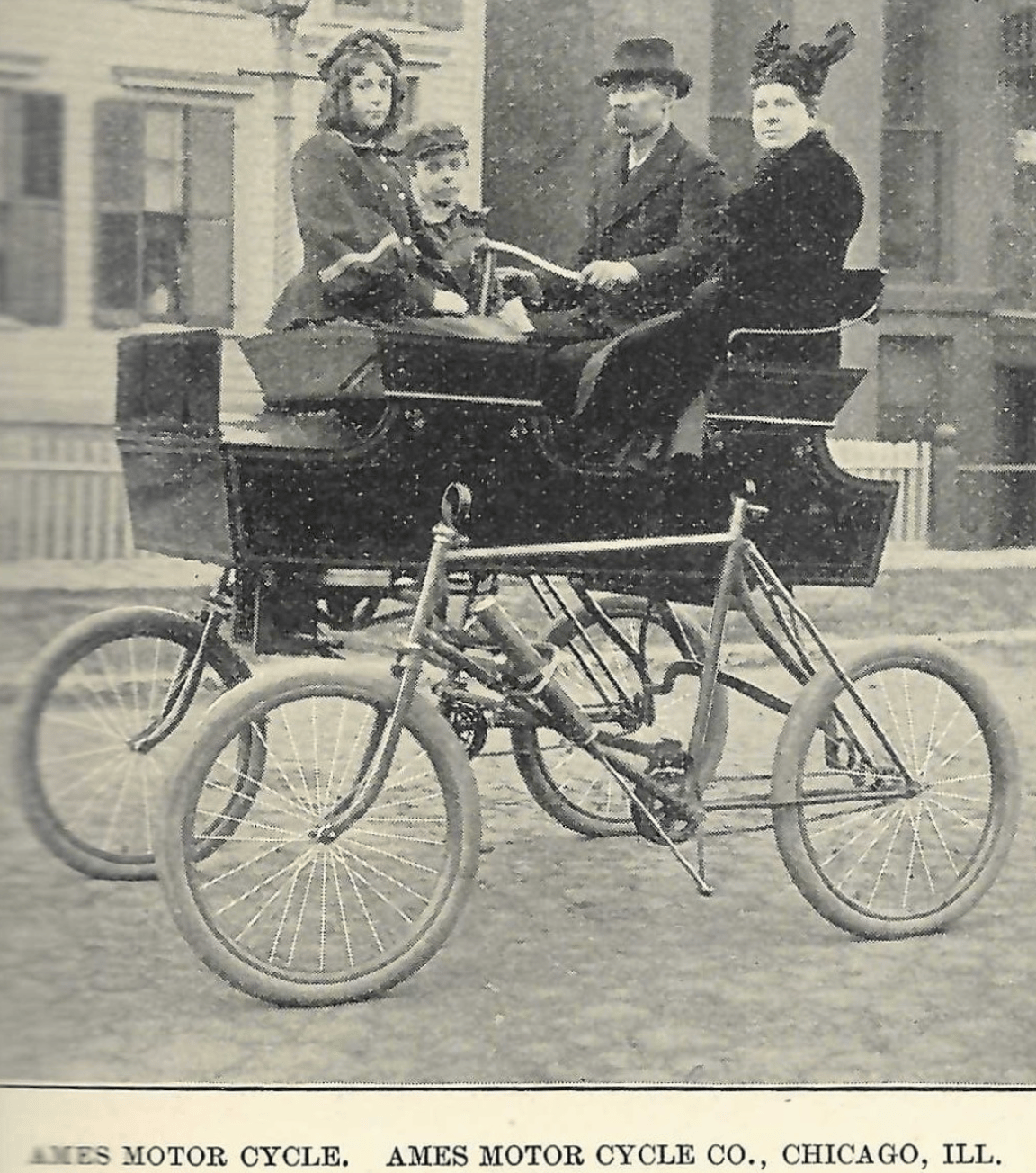
That valiant failure to find product-market fit occurred in 1891. Just a few years later, Daimler was selling automobiles so quickly that its piano factory had to be expanded — again and again — to keep up with demand.
The crypto factories don’t need expanding just yet. But if the vibe at DAS is any indication, they might soon.
Many of today’s speakers were extolling the future greatness of (mostly institutional) crypto — with lots of earnest talk on what’s still to come.
Here are a few of the things I heard.
Felipe Montealegre, “The Token Problem and Proposed Solutions”
Felipe had me at the first slide: “Everything is DCF.”
Crypto once seemed exempt from that iron law of finance, particularly in the boom of 2020/21, when sky-high token prices created the “perverse incentives” and “malinvestment” that Felipe says are largely responsible for the disastrous performance that followed.
As painful as that was for investors, it was even worse for the industry. Crypto builders, led astray by narrative investing, “squandered hundreds of millions of dollars on the wrong types of projects,” Felipe adds.
Felipe also cites lack of tokenholder rights, slow revenue growth, and low-quality revenue for the crypto malaise.
“The good news,” however, “is that all these things are reversing.”
Reasons to be hopeful include regulatory environment (value can now accrue to tokens), increasing transparency (Blockworks’ token transparency framework), and the rapid adoption of better practices. “We’re seeing dozens and dozens of good projects transition their structures to bind all value accrual to their tokens,” Felipe says.
“The malinvest problem is being solved by the revenue meta,” Felipe adds, which is leading crypto businesses “to spend their time and effort in creating value instead of chasing narratives.”
One of the projects he cites as adopting best practices is the Turtle Club, which I find reassuringly quirky. Crypto needs DCFs, but it needs to stay fun and interesting, too.
Felipe’s final slide was the most optimistic: “We haven’t even scratched the surface of programmable finance.”
Live recording, 1000x Podcast
Avi Felman and Jonah Van Bourg are excited about the crypto-enabled 24/7 trading of everything.
Avi believes that “the last month has put crypto on the map” with traditional finance, thanks to the 24/7 trading that’s been happening on Hyperliquid.
Trade.xyz, he notes, was recently doing 2% of global volume in oil futures.
Oil futures are probably the third-most traded kind, behind only equities and interest rates, so 2% is a lot.
This is the “first-time ever you’re seeing a product that’s crypto native really impacting global markets,” Avi says.
Jonah Van Bourg: “I think Hyperliquid will eat commodities trading.”
On crypto having a moment trading RWAs: “This is the first pitch of the first inning of that moment.”
Nikil Viswanathan, “The Agents Are Here”
Nikil from Alchemy has an OpenClaw agent that checks his calendar every 15 minutes and messages him if it looks like he’s not doing what he’s supposed to be doing.
I’m not sure that particular use case will catch on (I already know I’m usually not doing what I should be doing). But I am sure he’s right about agents spending our money. Within ten years, he says, “90% of commerce will be conducted by agents.”
Alchemy offers an AgentCard that’s like a Visa for your OpenClaw agents, and it’s planning a crypto wallet for them as well.
This might, in fact, be why we’re here: “There’s an argument that crypto was not made for humans, it was made for agents.”
Let’s hope the agents attend conferences.
Quotable quotes:
Xavier Meegan: “You have to be half-insane to think tokens are coming back.”
Off-the-record comment on institutional crypto trading: “It’s booming.”
Avi Felman, on trading perps on Hyperliquid instead of futures on exchanges: “It’s just so much easier. It’s also more fun.”
Jonah Van Burg, on Stan Druckenmiller’s prediction that the payments system will switch to stablecoins: “Druckenmiller is never wrong.”
Samara Cohen: Blockchains and tokenization will “shape all capital markets: what they are, who accesses them, and how broad the inevitable universe is.”
Alex W: “I want to TVL-mog them.”
Overheard: “I read about people who were paying people to install OpenClaw for them, and then a few days later they were paying people to uninstall it for them.”
Vibes metric: Canton had 1,500 registrations for a side event, with space for 400. (I was assured no fire department regulations were broken.)
Seen outside the venue:
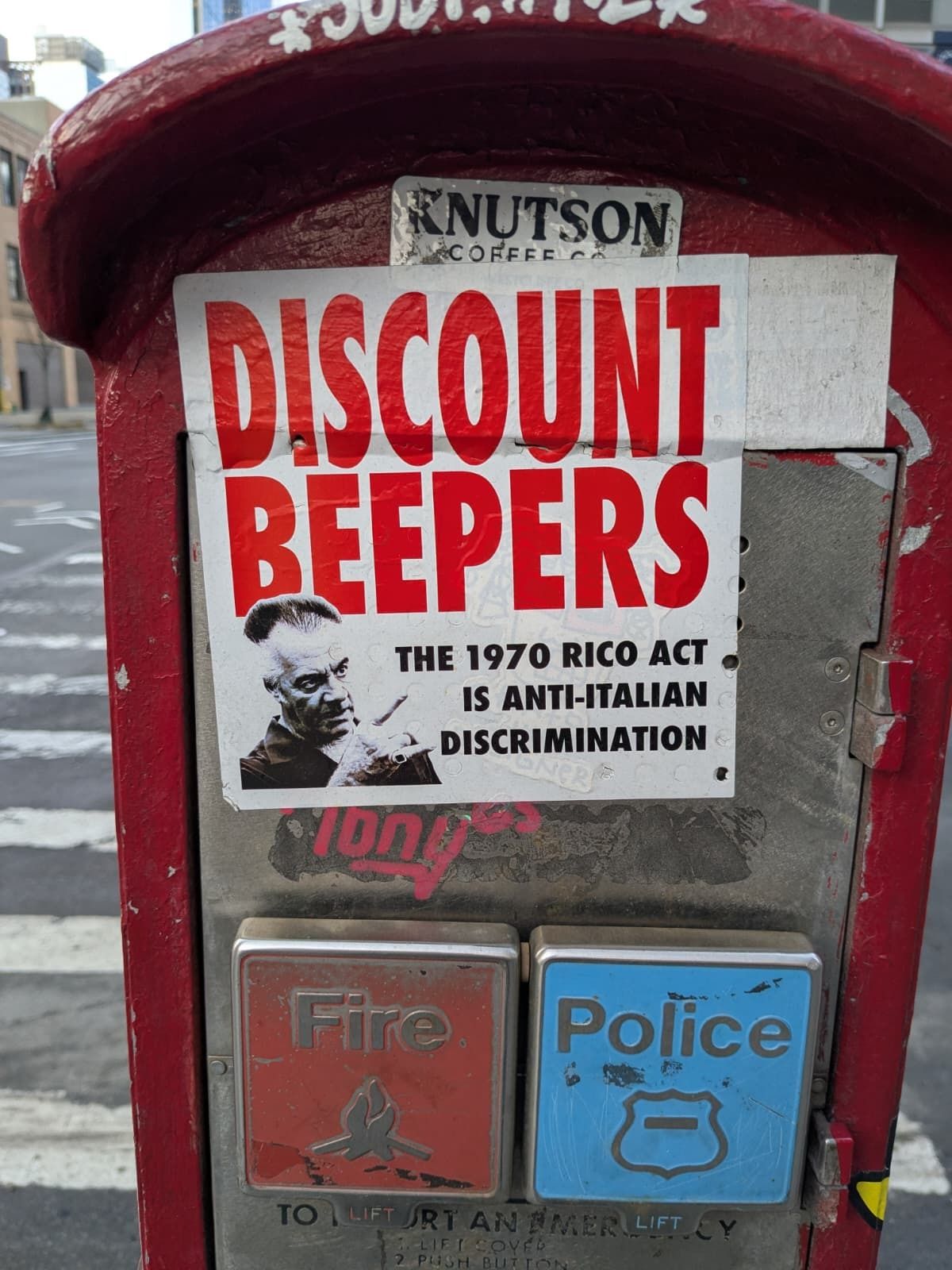
I guess this was just for laughs. But being one-quarter Italian, a devoted Sopranos fan, and on my way to a crypto conference, I took it as a semi-divine sign that people do still care about privacy. (And therefore, maybe, crypto.)
Day 2 takeaway: Institutional crypto has Horseless Age energy.

Brought to you by:

US Treasuries are the lifeblood of our financial system, providing collateral to support transactions, but outdated legacy systems hinder collateral mobility.
A new white paper from the ValueExchange dives into the future of collateral mobility, RWA tokenization, and what we can learn from a recent series of on-chain repo transactions conducted on Canton, the only public blockchain built for institutional finance.
With over $8T tokenized transactions flowing on Canton every month, including over $350B of on-chain US Treasuries moving daily, Canton is building the scalable, always-on capital markets infrastructure of the future.

Introducing Blockworks Investor Relations, an IR platform built for onchain businesses.
The latest Blockworks offering brings together analytics, a branded investor relations site, and integrated advisory support into a single platform. The result is a more efficient way to share your story, build trust with investors, and engage a global audience from day one.
If you’re building in crypto and want to upgrade your investor relations function, we’d love to work with you. Book a meeting with the Blockworks team to get started.