- The Breakdown
- Posts
- 🟪 Friday Charts




Friday charts: friend or foe?
Investors are hyper-focused on how artificial intelligence is about to change the world: Lumentum, a maker of optical networking components, is up 1,118% over the past year. SanDisk, a maker of flash memory storage, is up an incredible 3,209%.
Big Tech is all-in, too: in 2027 alone, the hyperscalers are expected to spend $1 trillion building datacenters.
It's a bet that seemingly everyone’s on board with: introducing an all-new form of intelligence into civilization will of course be a world-changing event.
But what if investors are right about intelligence, but wrong about the kind?
What if the new kind of intelligence about to change everything is not artificial, but extraterrestrial?
No, really.
This week, betting on Kalshi put the odds of the US government confirming that aliens exist before January 2029 at a whopping 36%.
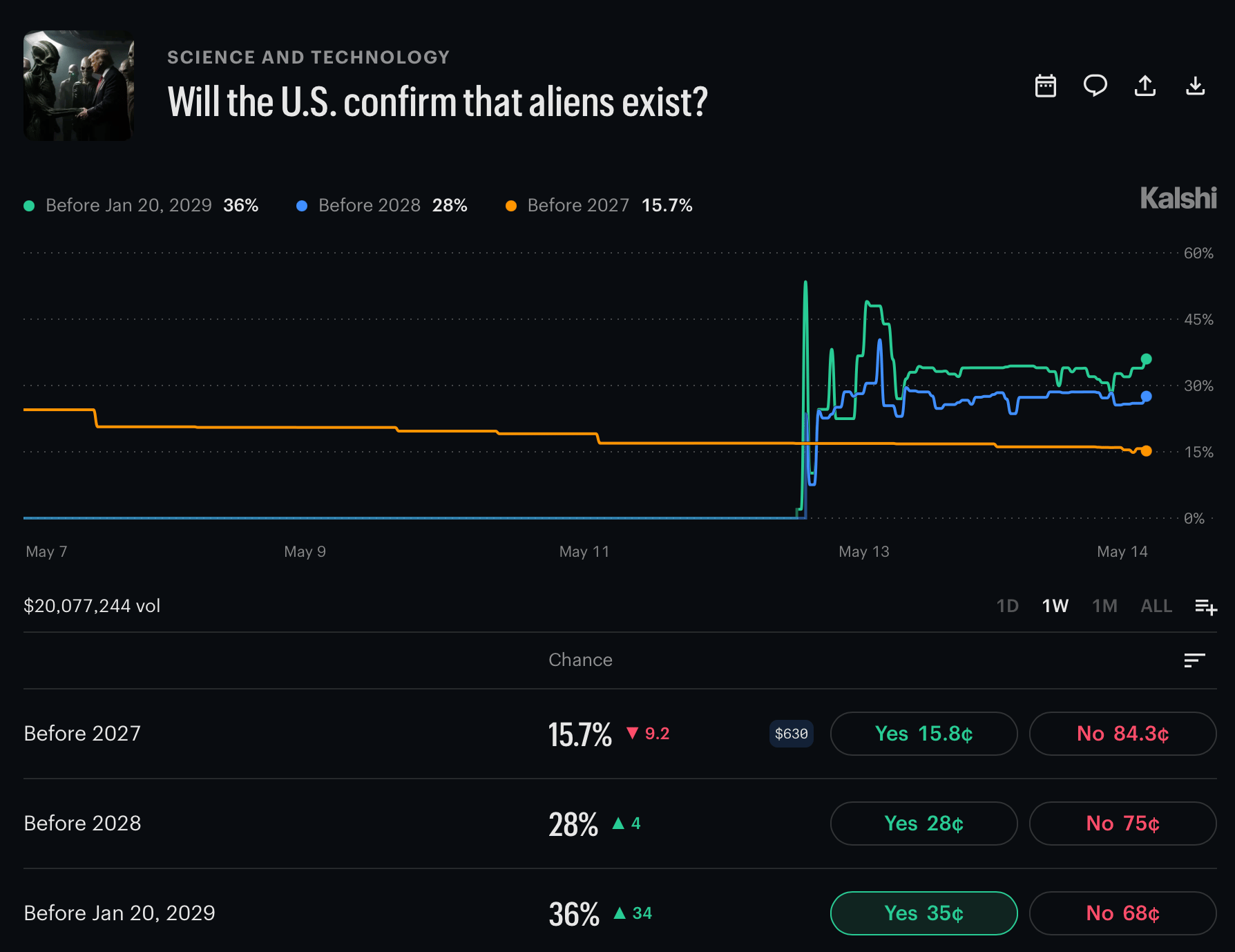
January 20, 2029 is just 982 days away.
Are investors pricing that in?
At this point, there’s no excuse not to — because it’s not just people in tin-foil hats seeing unexplainable things in the sky.
In September, for example, a congressional hearing featured de-classified military surveillance video showing an unidentified anomalous phenomenon (UAP) splitting a Hellfire missile in mid-flight. Hellfire missiles are six feet long, seven inches wide, and travel at 1,000 miles per hour. The UAP curved into it, split it in half, and then continued on its way.
It’s spooky. And there are many more examples.
A paper published by physicist Kevin Knuth of SUNY Albany reviews a number of those examples — military, commercial, and civilian aircraft that have encountered UAPs moving in ways that are far beyond the capabilities of any known technology.
Knuth’s conclusion reads like science fiction: “The observed flight characteristics of these craft are consistent with the flight characteristics required for interstellar travel, i.e., if these observed accelerations were sustainable in space, then these craft could easily reach relativistic speeds within a matter of minutes to hours and cover interstellar distances in a matter of days to weeks.”
SUNY Albany is the fourth best public university in New York, so the possibility that these UAPs came from a neighboring solar system has to be taken seriously.
The President of the United States is doing just that. In February, he directed federal agencies to make public all files related to “alien and extraterrestrial life,” UAPs, UFOs, and “all other information connected to these highly complex, but extremely interesting and important matters.”
Well, he’s taking it semi-seriously, at least. The President ended a social media post announcing the Department of War website that hosts the files with the sign-off: “Have fun and enjoy!”
People do seem to enjoy it: the site got 340 million hits in the first 12 hours.
But will it be fun for investors?
Helen McCaw, who served as a senior analyst in financial security at the Bank of England, believes that a government announcement confirming the existence of alien life could trigger a financial crisis.
“If there is an official announcement and we get presented with very clear evidence that nobody is going to dispute,” McCaw warned in a letter to the Bank of England, “I would say that in a matter of hours, you are going to have total financial instability.”
Banks could fail, she warns, causing payments systems to stop working. If so, “you’ll have rioting on the streets because people can’t fill their cars up with fuel or buy food in the supermarket.”
Yikes.
And that’s just on an announcement of extraterrestrial life — which, I’ll remind you, Kalshi believes is a 36% probability within 982 days.
So what happens when the aliens actually get here?
An academic paper published in Acta Astronautica — a real peer-reviewed journal affiliated with the International Academy of Astronautics (an elite professional society), and published by Elsevier (a reputable publisher) — considers all the possibilities.
Some of them are positive!
“An advanced ETI may be capable of solving a great many of humanity’s problems, such as world hunger, poverty, or disease,” the paper says. “Benevolent ETI may even design their first message to contain information on how to avoid technological catastrophe in order to help less developed civilizations succeed.”
We could use the help, for sure.
Alas, many of the possibilities are negative.
“Given that ETI are likely much more advanced than human civilization, contact with uncooperative ETI seems likely to be harmful to humanity,” the paper warns. “This type of ETI civilization would likely consume all the resources of Earth and destroy humanity if we got in its way.”
YIKES!
Or, they might choose to keep us around. “ETI may simply be interested in using us as a means for growth of their economy. On an individual level they may not be interested in killing us, but may be interested in incorporating us into their civilization so they can sell us their products, keep us as pets, or have us mine raw materials for them.”
That sounds even worse, actually.
McCaw expects investors to immediately assume the very, very worst. “There might be extreme price volatility in financial markets due to catastrophising,” she warned the Bank of England, “and a collapse in confidence if market participants feel uncertain on how to price assets using any of the familiar methods.”
How that might play out is anyone’s guess at this point. “There might be a rush to perceived safe assets such as physical gold, other precious metals and some types of government bonds,” McCaw says. “Alternatively, precious metals might lose their status as perceived safe assets if people speculate that new space-faring technologies will soon increase the supply of precious metals.”
Fortunately, there are a few assets that seem likely to hedge our exposure to the discovery of alien intelligence.
Tuttle Capital offers the UFO Disclosure ETF (UFOD), which holds shares in companies they believe are “positioned to benefit from the disclosure, confirmation, or commercialization of advanced non-human technologies.”
The issuer says the ETF offers “alien alpha.”
Similarly, asset manager David Dorr recommends shares of Lockheed Martin, which he believes is in possession of an alien spacecraft. Once the existence of aliens is formally recognized, Lockheed will be able to monetize what the spacecraft has taught it about alien technology.
Crypto could be a winner, too. “There might be a rush to digital currencies such as bitcoin,” McCaw says, “which may prove appealing if people question the legitimacy of government and lose trust in government-backed assets.”
Just like Satoshi planned it!
Investors seem to be doing very little of this, however. UFOD has just $2.4 million of assets under management — and both Lockheed Martin and bitcoin have been woeful underperformers.
That might indicate that we have yet to come to terms with the Kalshi odds.
But it might also mean that we’re not too worried about it.
Knuth’s paper cites survey results that show that “many people across the world anticipate that contact with ETI will benefit humanity in some way.”
I agree. I think they’ll be our friends.
(Note: I have a bachelor’s degree in history from the first best public university in New York.)
Let’s check the charts — while we still can.
Scenario analysis:
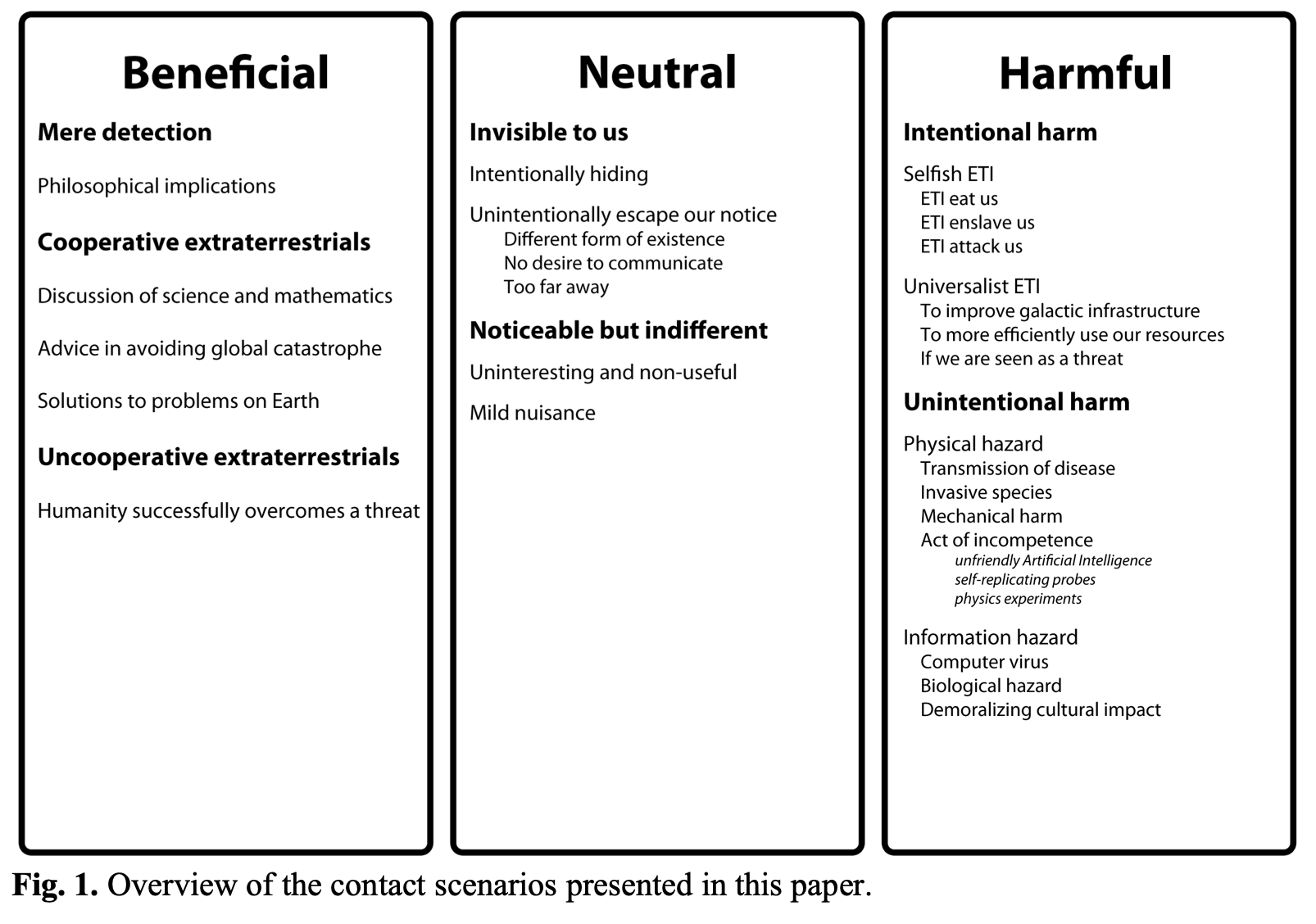
From the aforementioned paper. The harmful box is worryingly busy.
Betting big:
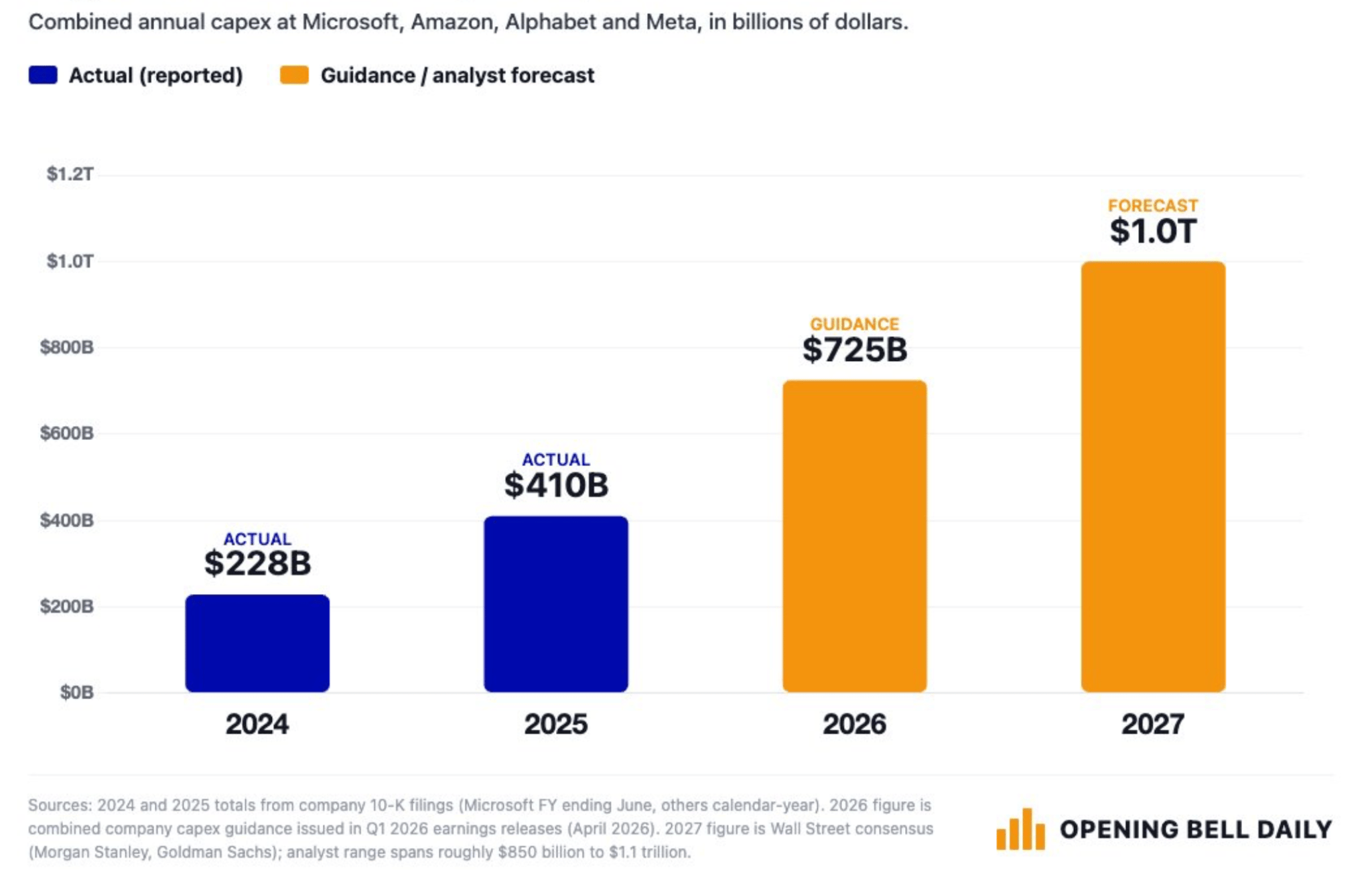
The hyperscalers are forecast to collectively spend $1 trillion on capex next year.
ROI?
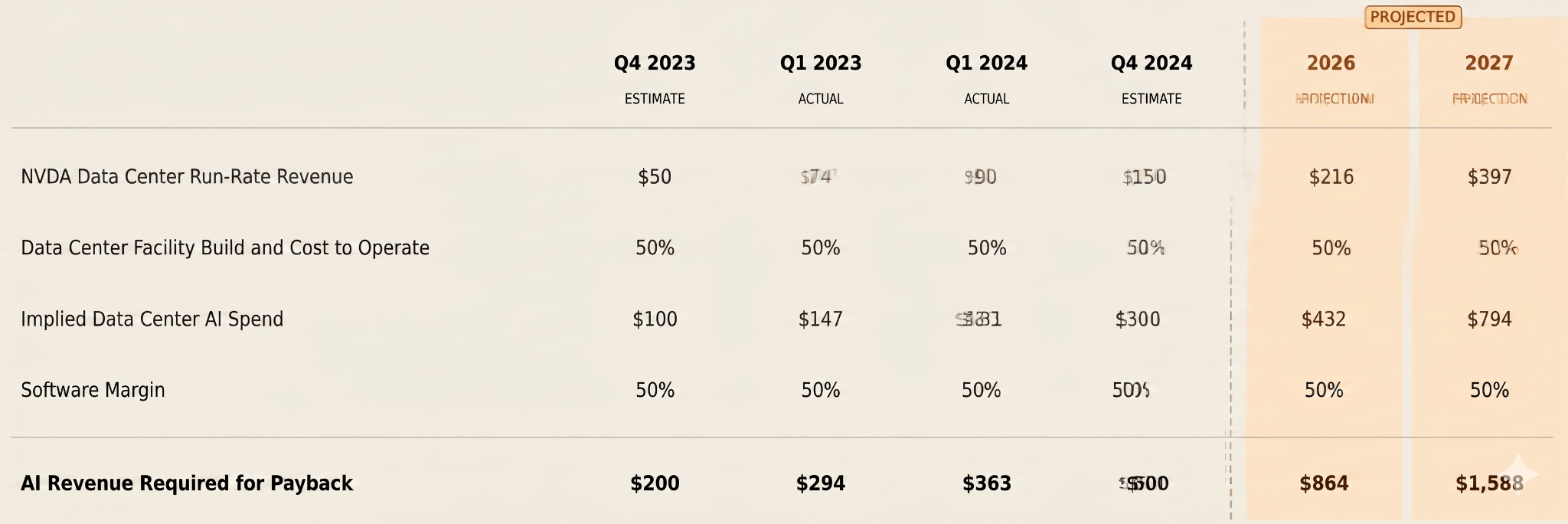
Callum Williams estimates the AI industry will need to generate $1.59 trillion of revenue in 2027 to justify the current rate of investment.
We’re gonna need a bigger data center:

A chart from investor Daniel Saedi illustrates how much more compute the world might need: 84% of the world’s population hasn’t even tried using an LLM yet.
Surprise leader in agentic AI:
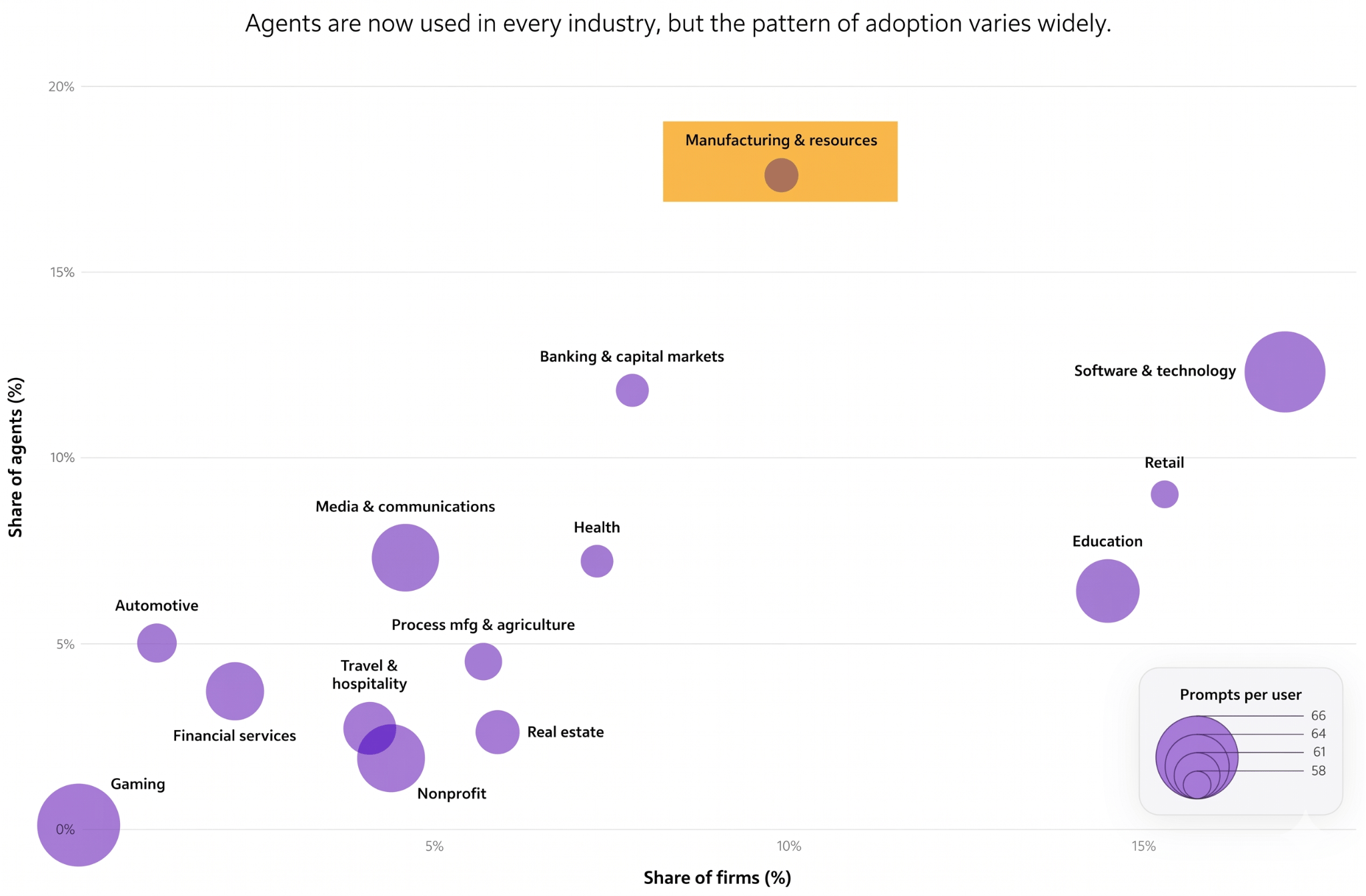
Microsoft data (via Moses Sternstein) suggests that, somehow, manufacturing and resource companies are the most intensive users of AI agents.
Otherworldly performance:
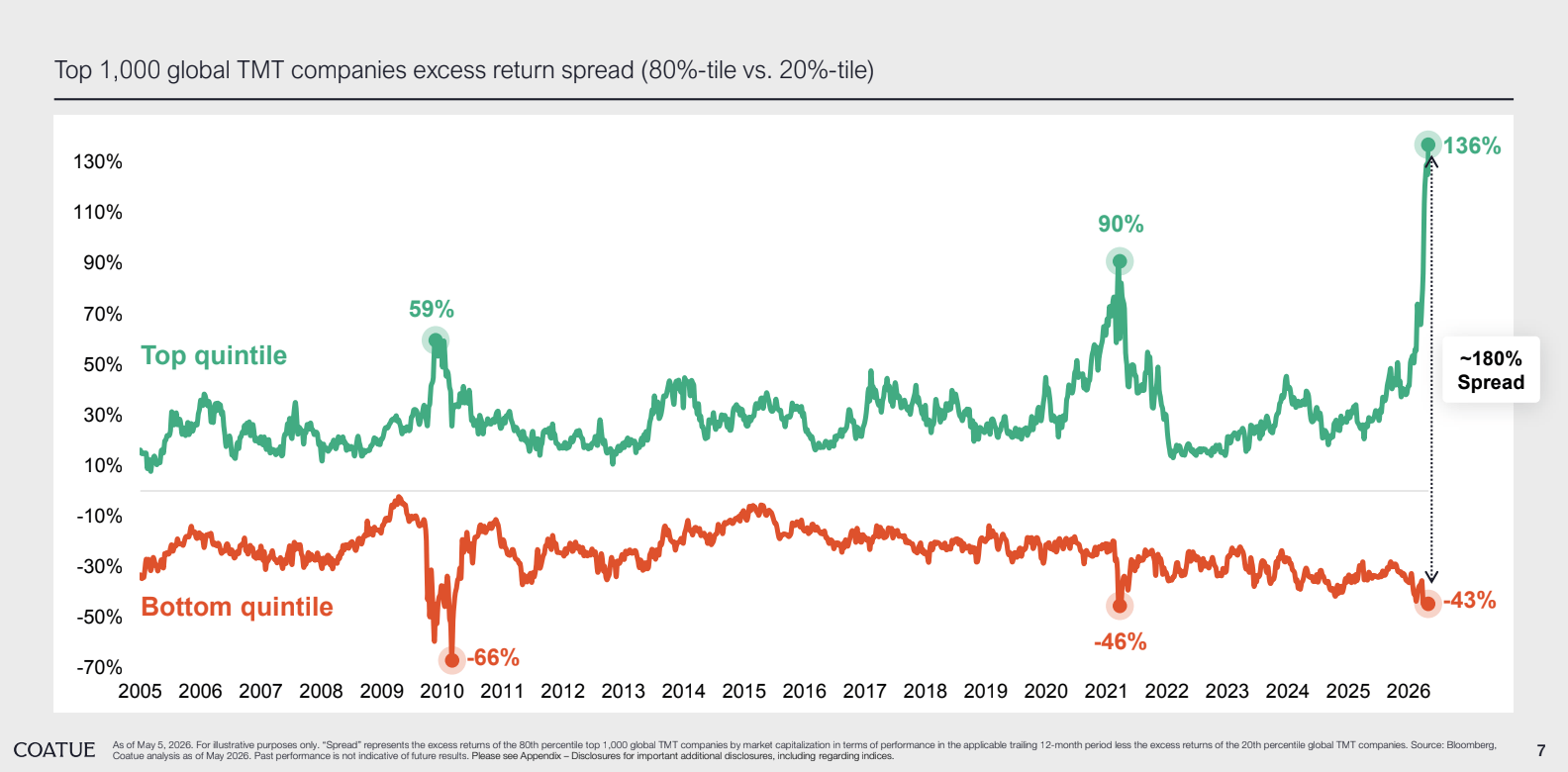
Data from Coatue illustrates just how all-in investors are on AI.
The power law of AI talent:
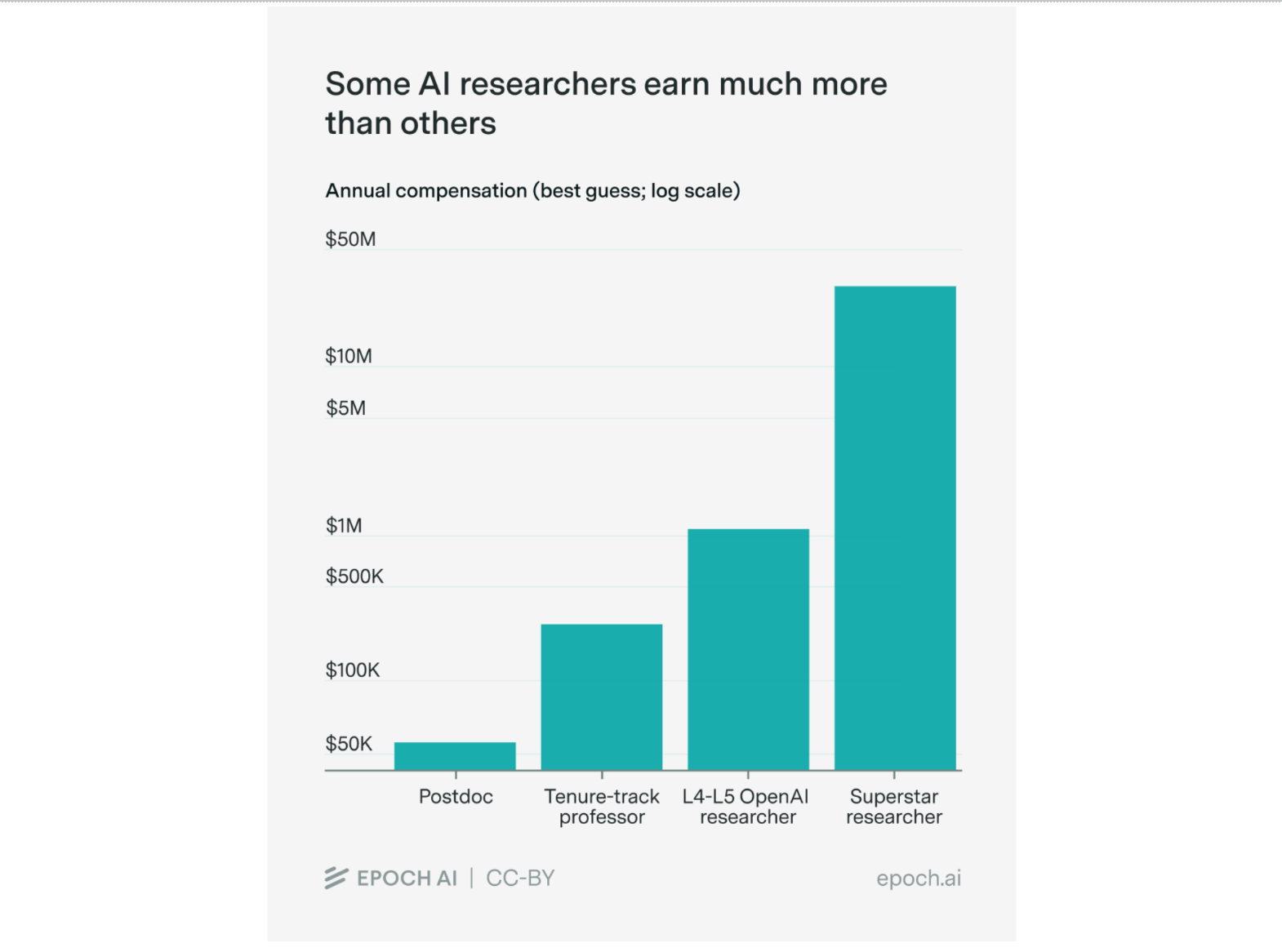
The top AI researchers make 1,000 times more than a postdoc researcher.
Peak 18:
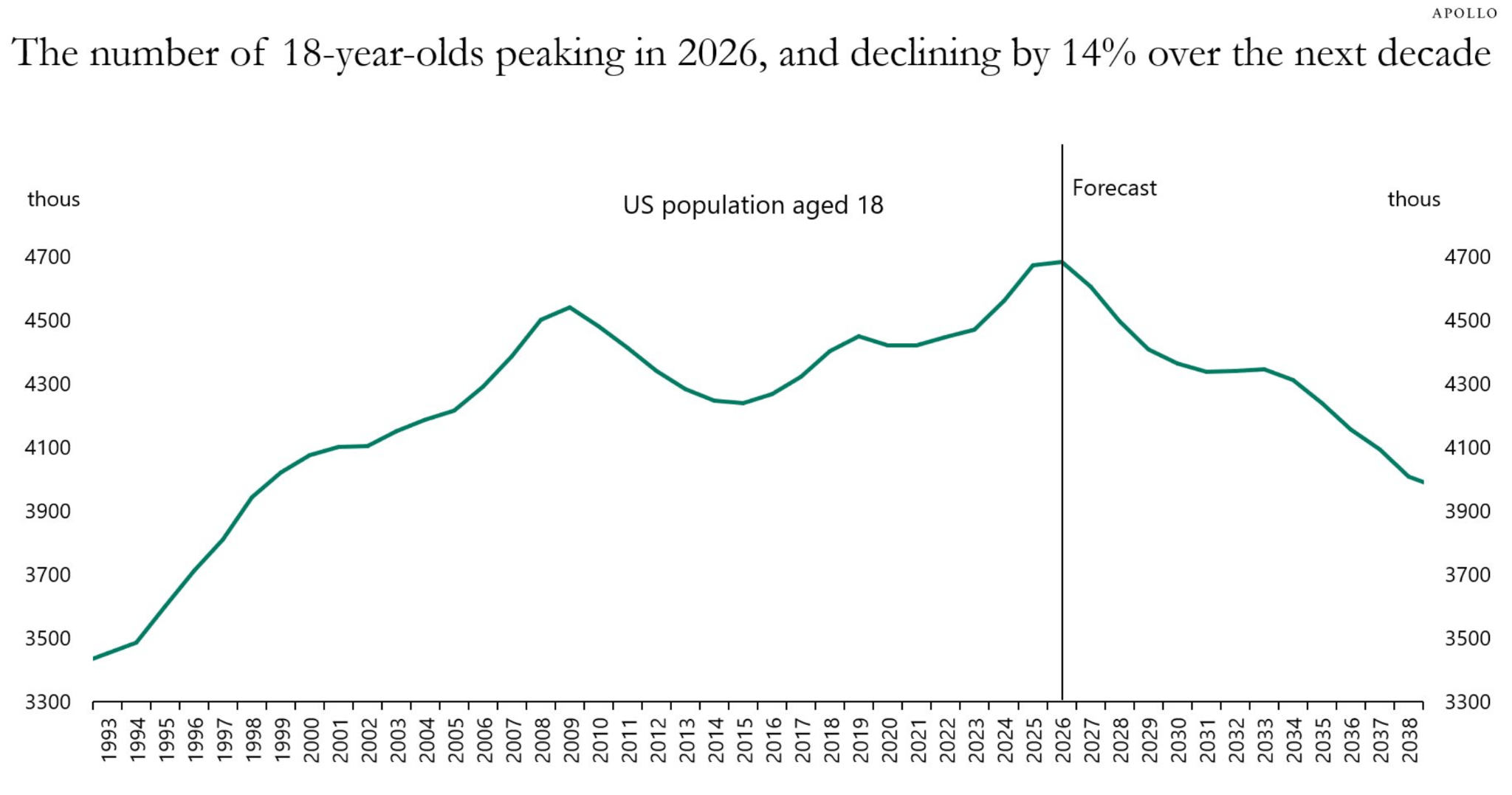
There may never be as many 18-year-olds in the US as there are right now. (I’m guessing aliens skew older.)
Step change in intelligence:
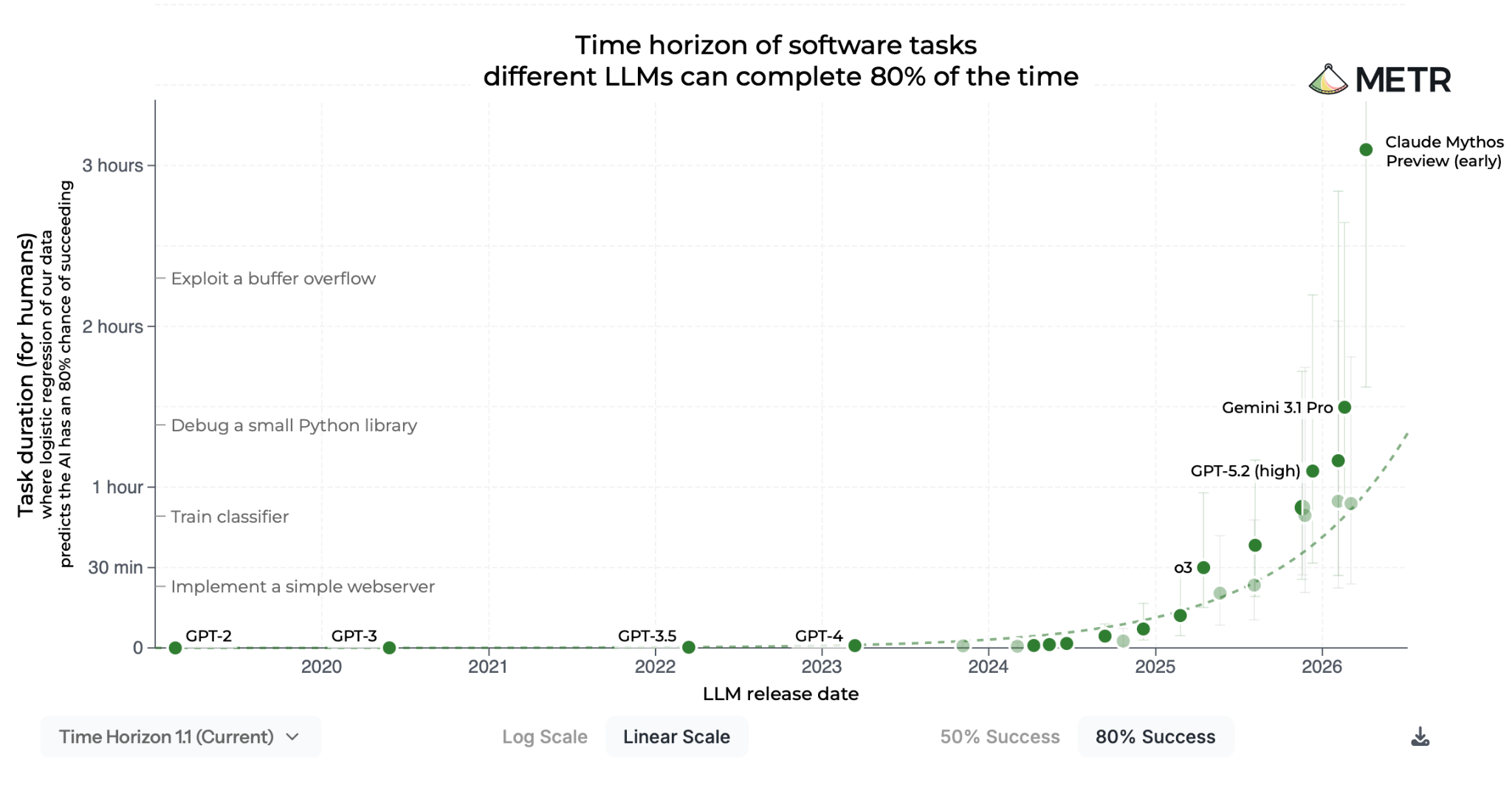
As measured by how long it can work on a task without losing the plot, Mythos is nearly off the charts.
Artificial IQ:
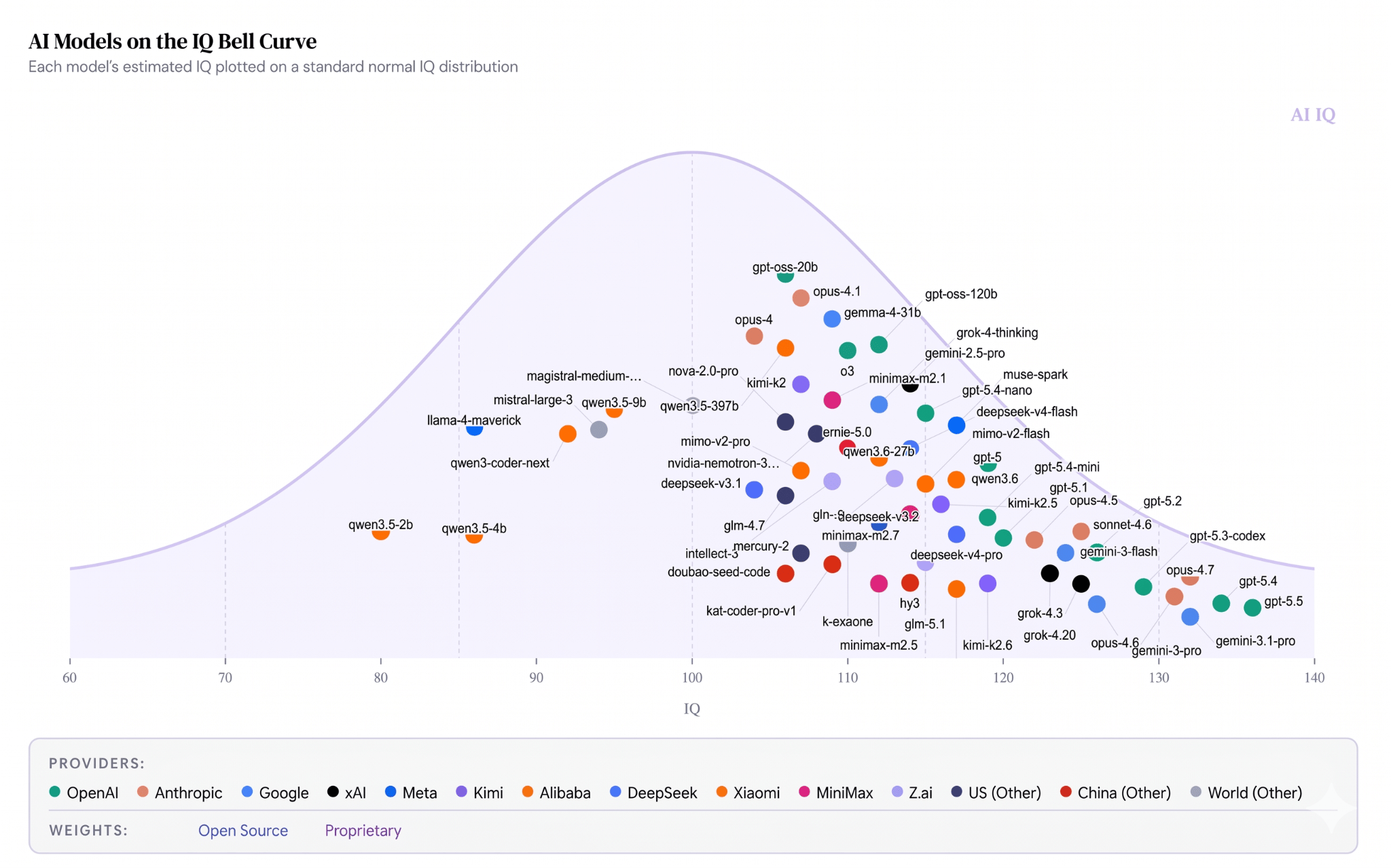
AI researcher Ryan Shea estimates the equivalent human IQ of all the major language models (Mythos not yet included). 100 is considered average for humans. 130 is considered gifted.
Where will aliens score?
There’s about a one-third chance we’ll soon find out.
Have a great weekend, out-of-this-world readers.


Q1 was a transformative quarter for Jito, marked by rapid validator adoption of BAM and growth in institutional distribution channels.
Join us in partnership with Jito for their official Q1 Quarterly Call, where we’ll break down the numbers, trends, and key takeaways from Q1 for one of crypto’s most influential protocols.
On Wednesday, May 20 at 1 pm ET, watch the call live from X, YouTube, LinkedIn or Blockworks.com.