- The Breakdown
- Posts
- 🟪 Friday charts




Friday charts: The good old days are now
It’s impossible to rewatch Home Alone (as I do every Christmas) without feeling bathed in the warm glow of 1990s nostalgia.
Putting coins in a payphone; waking up to a clock radio (or not waking up); running straight through airport security because you’re late for a flight; drinking Pepsi at dinner; bringing newspaper coupons to the grocery store.
And the prices!
Kevin McCallister managed to fill two bags of groceries — including such staples as milk, Wonder Bread, Kraft mac and cheese, and a TV dinner — for just $19.83 (after a $1 coupon, but before taxes).
Today, the same haul would set Kevin back roughly $43.25 — 118% more expensive! (Note: I’m extrapolating two years of inflation from these 2023 estimates).
Not shown, however, are the wages.
Kevin’s dad clearly made a killing doing whatever he did. But for the average American in 1990, the weekly wage was just $413.
Today, it’s $1,214 — 194% more!
Adjusted for wages then, groceries are 25.8% cheaper now than they were in 1990 (assuming you still shop for Wonder Bread, mac and cheese, and TV dinners).
Better yet is the price of pizza.
The 10 Little Nero’s pizzas the McCallisters had delivered that fateful night cost them $122.50, including tax and delivery fee (but before Mrs. McCallister’s generous tip).
Today, 10 Little Caesars pizzas delivered to the same address would cost…wait for it…$105.25!
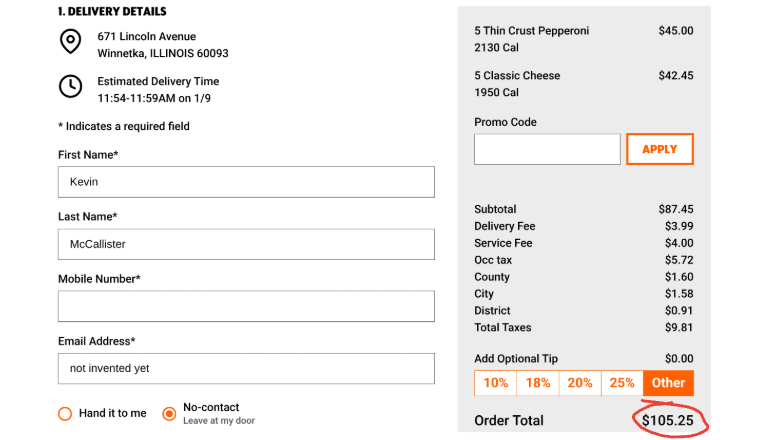
Incredibly, the price of delivery pizza is cheaper now than it was in 1990 in nominal terms.
What a time to be alive.
The one fly in the ointment is housing. The McCallisters’ large brick house in a prime Chicago suburb sold for just $875,000 in 1989. In 2025, it sold again for $5.5 million. In inflation-adjusted terms, that’s a 100% increase.
Fortunately, we don’t all have to live in a swanky Chicago suburb. The McCallisters’ house was already 7x more expensive than the average US house in 1989.
Today, it’s 13x more so.
By contrast, the inflation-adjusted cost of an average US house is up only 30% since 1989 (and maybe just half that amount on a per-square-foot basis — the average house is about 16% bigger, and with fewer occupants).
30%? We can make that back by subsisting on cheap delivery pizza in no time.
And everything else, adjusted for wages, should get a lot cheaper while we do — even faster than it has been.
The 1990s world of Home Alone is nostalgic but essentially the same as ours — the McCallister family had virtually everything we do now, with the exception of cell phones (which would have ruined the plot) and the internet (a mixed blessing).
Pizzas, for example, are still delivered by humans, who manually drive cars.
The world of the 2020s, though?
That will look completely alien to someone re-watching, say, The Bear or Ted Lasso in the year 2055.
Where are the robots? they’ll wonder. The personal AIs? Why are they staring at little screens? What are these fun “jobs” they all get to do????
And why is everything so cheap?
Ah, the 2020s, they’ll inevitably marvel. THOSE were the days.
Let’s check the charts.
Wages vs. groceries:
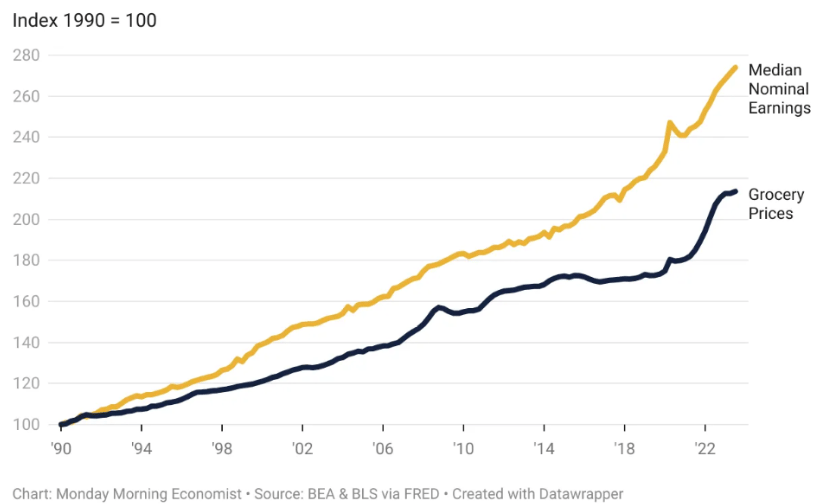
It might not feel like it, but wages rise faster than grocery prices most years — 1990s prices were great, but 2025 wages are even better.
Still growing:

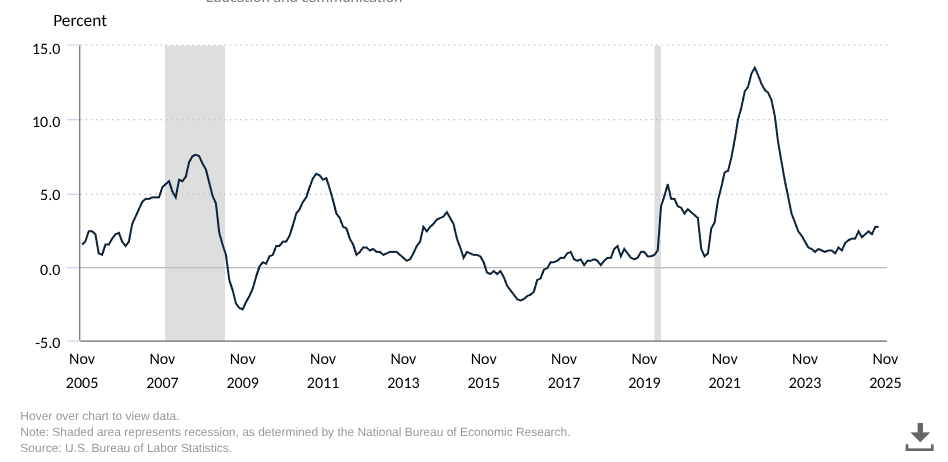
Wage growth is slowing, but remains robust at just over 4% — and well above the 2.6% rate of growth in food at home (per below).
Food-at-home:
Source: BLS
Everyone remembers when the price of eating at home rose 13% in 2022, but we forget that it usually does nothing — and sometimes even falls.
Not just in the US:
Source: Our World in Data
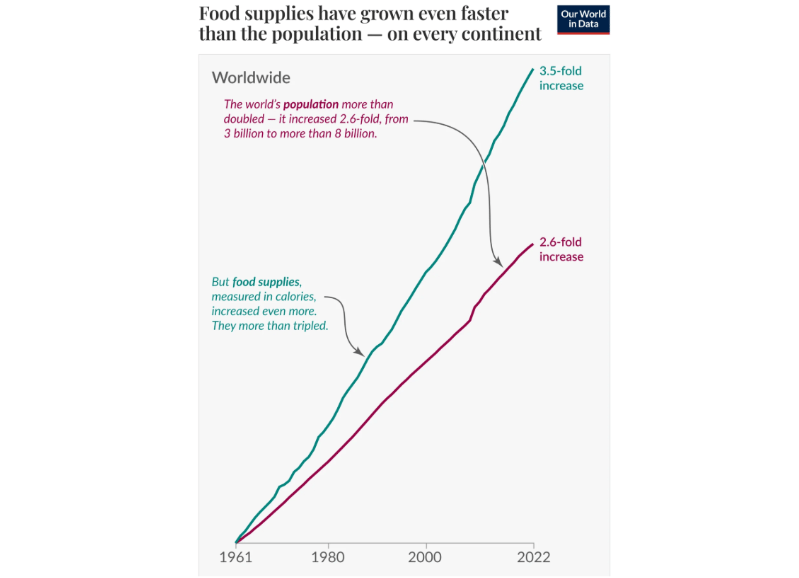
Happily, the supply of food has been rising faster than populations pretty much everywhere.
Going retro:
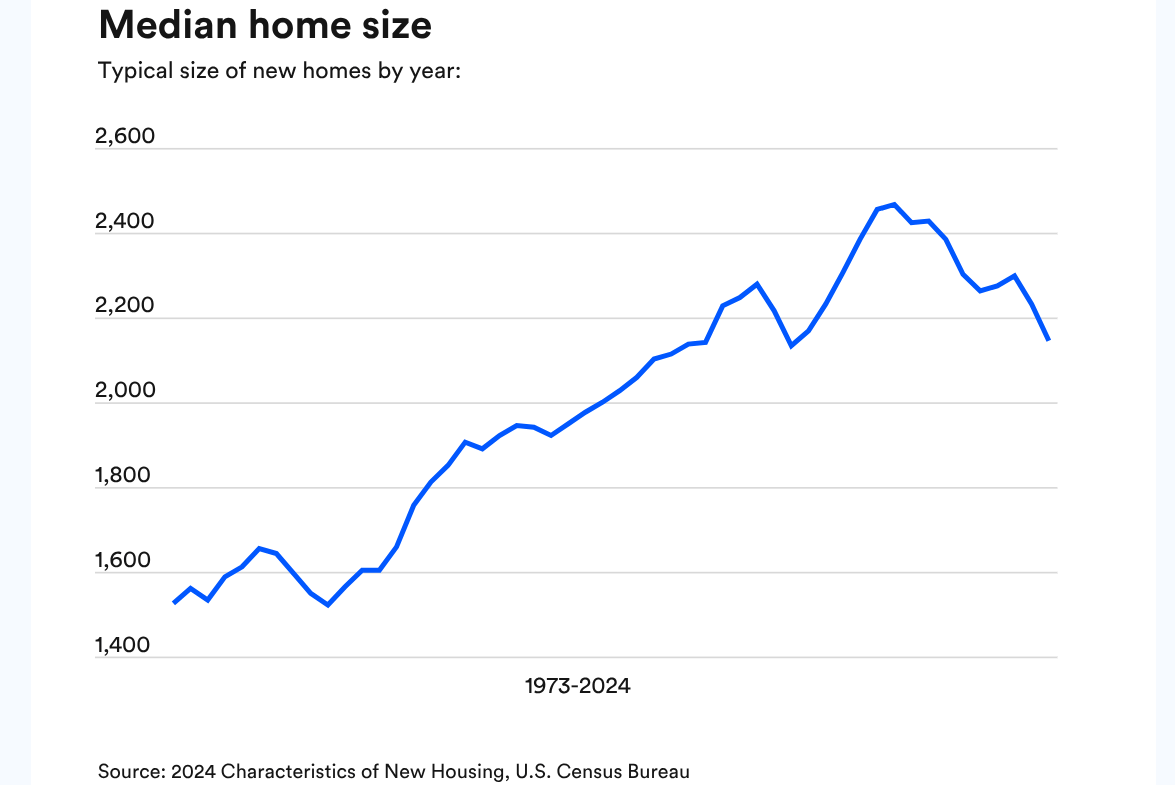
In an out-of-character twist for Americans, the size of new-build homes in the US has reversed a long trend upwards. Note: The McCallister home is an indulgent 9,126 square feet.
Econ 101:

Housing in Chicago, New York and San Francisco has gotten truly unaffordable, but in cities that allow builders to build, prices have fallen. Supply and demand remains undefeated.
You can just move, too:

Since 2020, people have been moving to where housing is more reasonable. California has lost 3.7% of its population (1.47 million people) since 2020 to other states.
The pizza metric:

Gale Pooley notes that the same amount of unskilled labor that it took to buy one pizza in 1990 bought 3.8 pizzas in 2024. If the same worker learned a skill along the way, they could earn 8.4 pizzas in 2024 in the time it took them to earn one in 1990.
Which skills, though?

Perhaps surprisingly, the FT finds that social skills have been more valuable than math skills in the couple of decades since Kevin outsmarted the Wet Bandits.
The surprise investment of the year:

The Venezuelan stock market is up roughly 200% year to date, in bolivar terms — and the bolivar appears to be down only about 20% vs. the dollar.
That’s probably not an investment that will compound for you — but, with luck, your wages probably will.
Have a great weekend, golden-age readers.
Programming note: The newsletter will be paused for a staff retreat next week as Blockworks plans its world takeover. Make the most of the extra five minutes a day you’ll have, and I’ll see you on the 19th.


Crypto's premier institutional event is returning to NYC this coming March 24-26.
Get your ticket today with promo code: BREAKDOWNNL for $100 off.