- The Breakdown
- Posts
- 🟪 Friday charts



Friday charts: You’re worried about the wrong things
Historian Ada Palmer says the discovery of the Americas in the 1490s was not big news in Europe.
It should have been. Columbus making landfall in uncharted territory meant that every map of the world was wrong. It meant the ancients were wrong about geography (and everything else, too?). It meant the world was much, much bigger than anyone thought it was.
But there were three wars happening in Europe at the time, so they had other things to worry about.
Palmer says that’s always been the way.
In a conversation with Dwarkesh Patel, she uses a stylized version of the 1490s to explain a lesson she’s learned from history: People are usually worried about the wrong things.
An era is always wrong about what ideas and what changes are the really big ones. They’re always much, much more worried about, “Oh my God, the Prince of Spain, which princess is he gonna marry? This is the most important thing that has ever happened in the entire stream of time.” Other people are like, “We’ve discovered another continent,” and they’re like, “We don’t care. We just wanna know who’s gonna marry Charles.”
History is full of such examples.
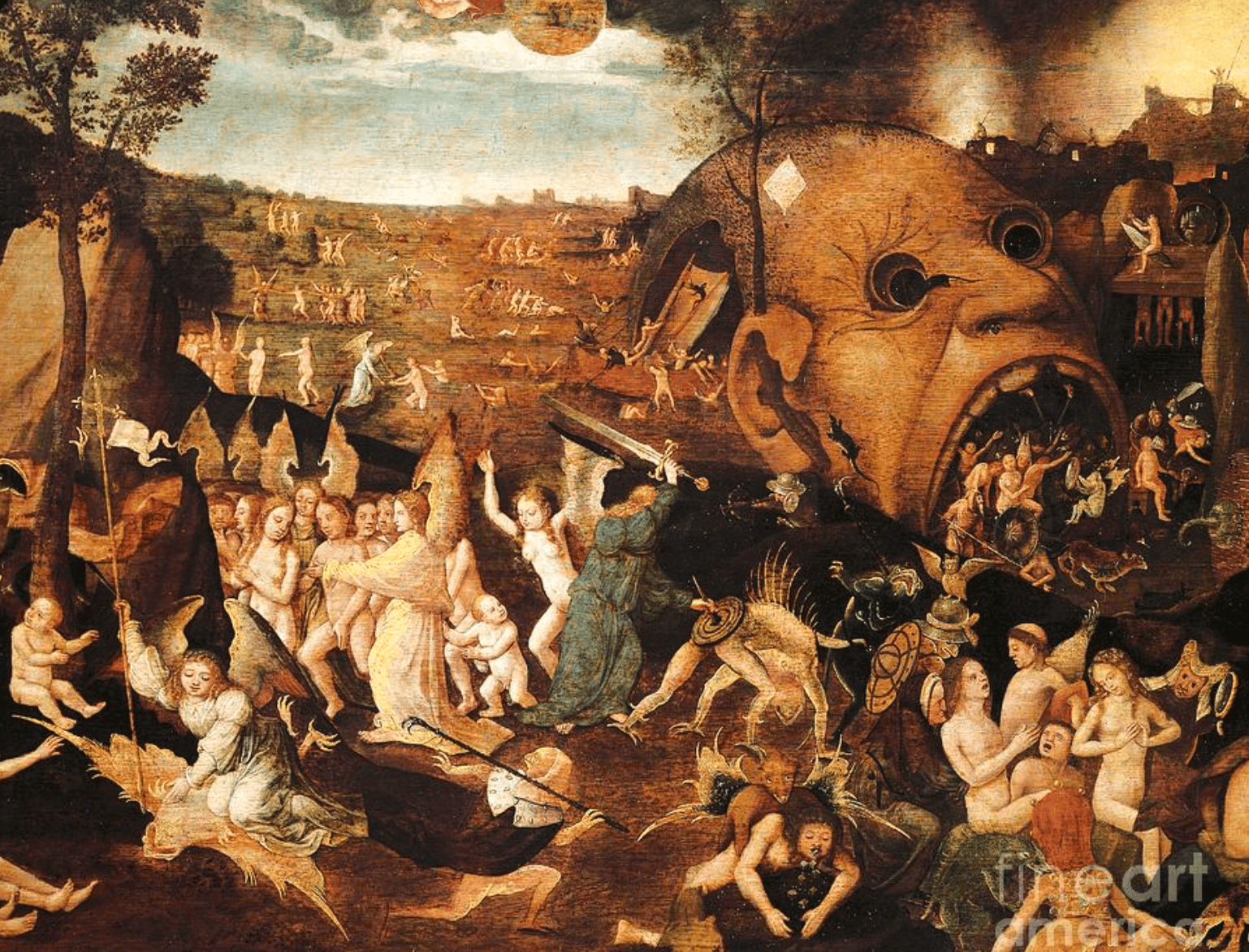
In the 1450s, Europe was terrified that the Fall of Constantinople meant the end of Christendom. The printing press that would launch the Reformation and Scientific Revolution seemed inconsequential by comparison.
In the 1760s, the Seven Years’ War had people losing sleep over who would control the fur trade in the Ohio River Valley. Few considered how James Watt’s steam engine would mechanize the world.
In the 1880s, the Scramble for Africa dominated front-page headlines while the lightbulb was a curiosity at niche science exhibitions.
I know what you’re thinking: That’s quaint that people worried about the Ohio fur trade. Today we have bigger problems — we’re worried about the end of the world.
Ada Palmer wants you to know that’s exactly how they felt, too: “We are not unique in feeling like we’re living through an apocalypse.”
In fact, this “has been the native experience of humanity since 1450.”
That’s roughly when Gutenberg’s printing press became operational, and Palmer says “we’ve been living in a constant sequence of information revolutions” ever since.
That, she explains, is the source of the anxiety you feel — the same one people have been feeling, on and off, for generations.
Every time a new information technology has been developed suddenly, all of the scary voices get a hundred times louder, no matter what you are scared of, because it [amplifies] political fringes in every direction. If you’re scared of the left, the scary left is louder. If you’re scared of the right, the scary right is louder. If you’re scared of the Catholics, the scary Catholics are louder. If you’re scared of the Protestants, the scary Protestants are louder. This causes a sense of panic. The fear that our enemies are suddenly all around us in a way that they weren’t before.
This happens because incumbent information technologies are always controlled by the dominant culture. So, when a new one comes along — social media, for example — the earliest adopters are always the people who were silenced under the old system.
Hearing those voices burst out into the open has always been a shock. It creates a feeling of panic, Palmer says — a “feeling that everything is scarier than it’s ever been in our lives.”
Even the existential fears over AI are nothing new: “In every one of those generations, you can find people saying, ‘Oh, my God! The world is suddenly ending.’”
It hasn’t — and Palmer thinks this time is no exception because “we’re not living through an apocalypse. We’re living through…an information revolution.”
She has some advice on how to survive it:
We need to calmly think long-term and remind ourselves that human beings in past generations faced exactly this level of fear, exactly this level of sense that the world was ending. They dealt with it, faced it, did the best they could, and that is what we need to do as well.
Survival is a low bar, of course. There are plenty of bad things that could happen that would fall short of the apocalypse. But history suggests we’re very bad at knowing which of those things to worry about.
For example, we worried about peak oil when we should have been worried about climate change. We worried about the world having too many people when we should have been worried about it having too few. We worried about what princess Charles was going to marry when we should have worried about…well, anything else!
So here’s my lesson from history: If we can’t worry about the right thing, why worry at all?
Let’s check the charts instead.
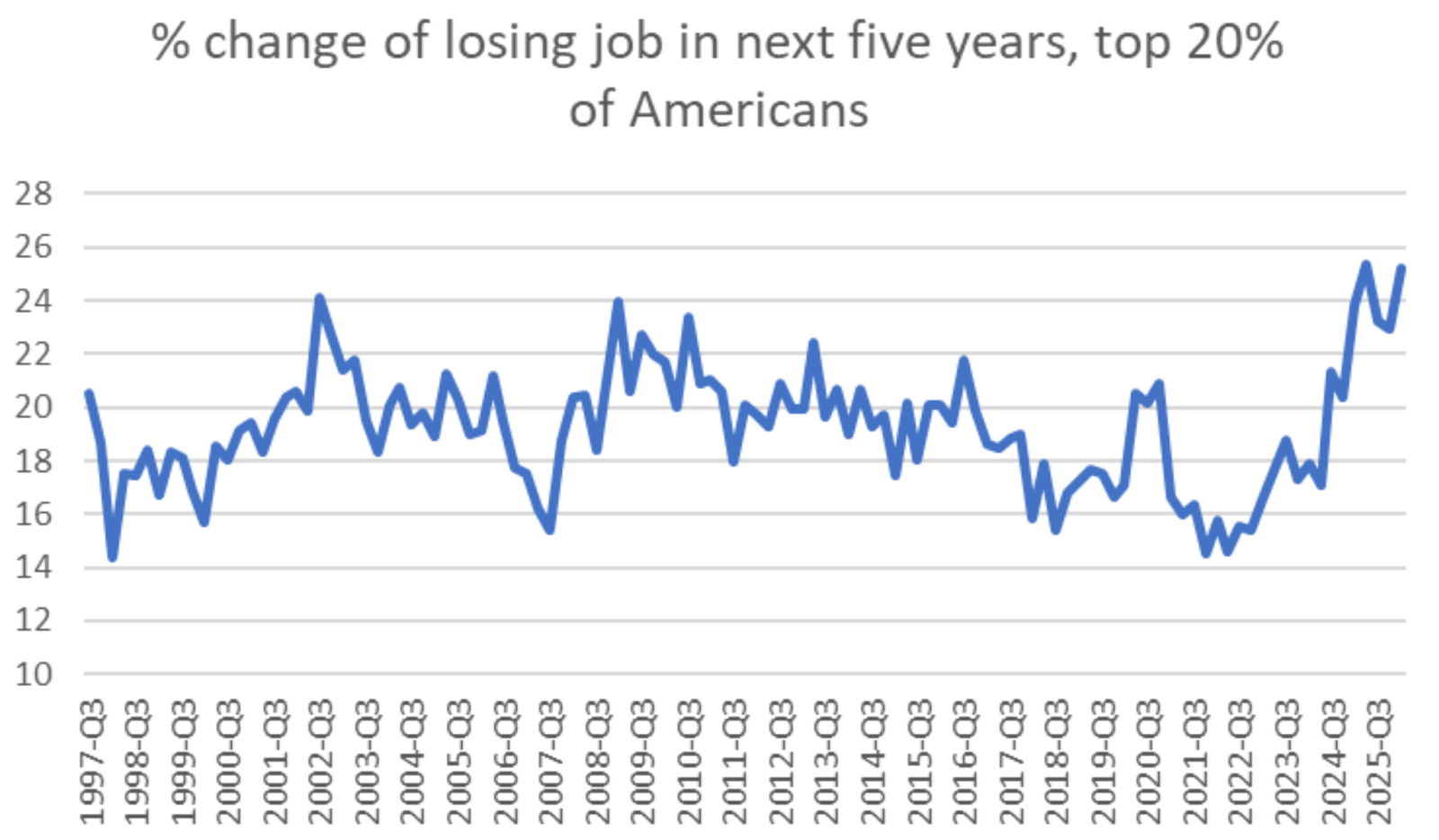
Callum Williams charts Michigan survey data showing that nearly 26% of top-decile earners think they could lose their job in the next five years. “America’s elite has never been more worried about losing their job,” he concludes. (“Never” meaning from the start of data in 1997.)
Movin’ on up:
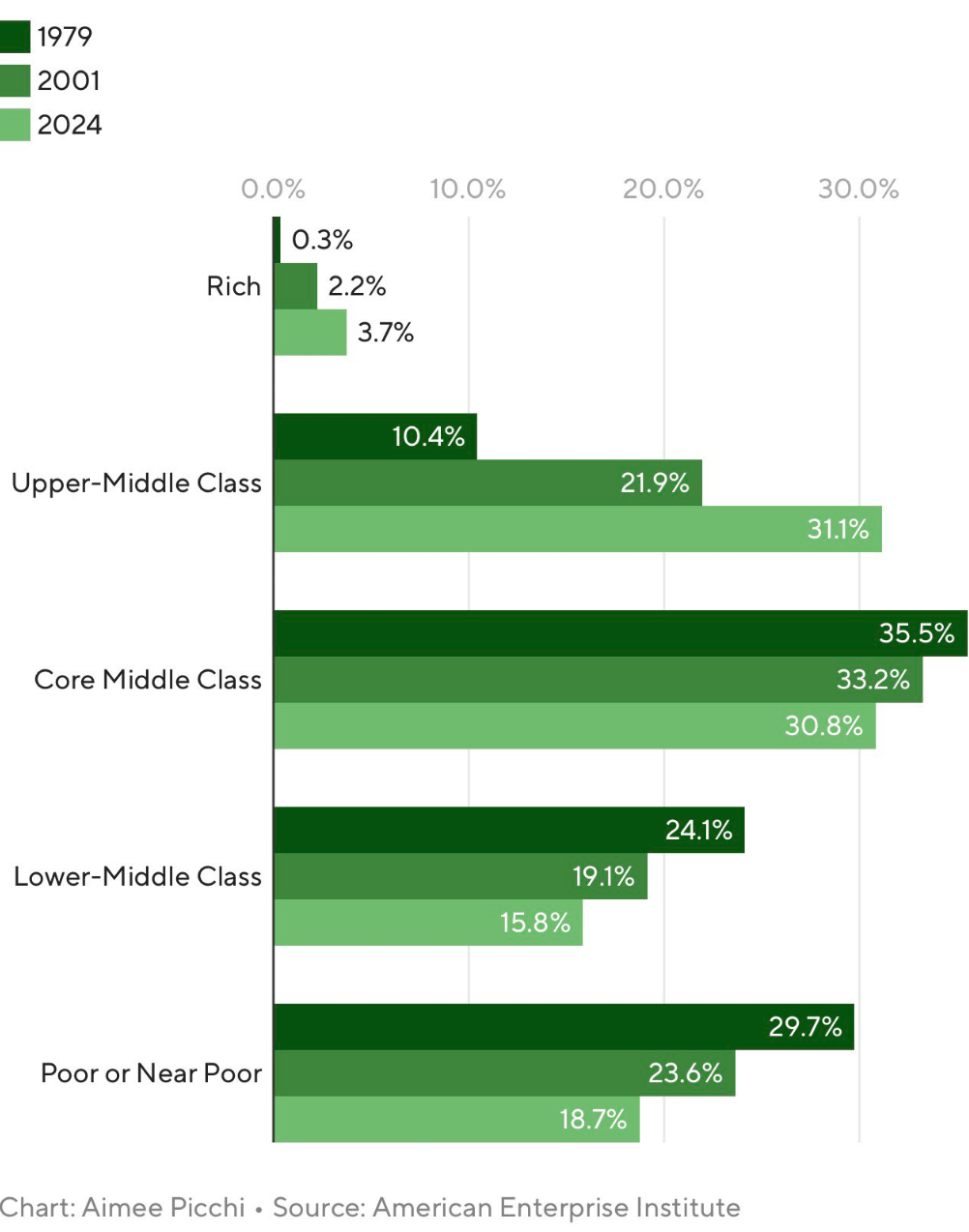
Americans have spent decades worrying about “the shrinking middle class.” Data from the AEI shows that it’s been shrinking because people have been moving up, not down. In 1979, 10.4% of Americans belonged to the “upper middle class.” Now, it’s 31.1%.
Software developer jobs:
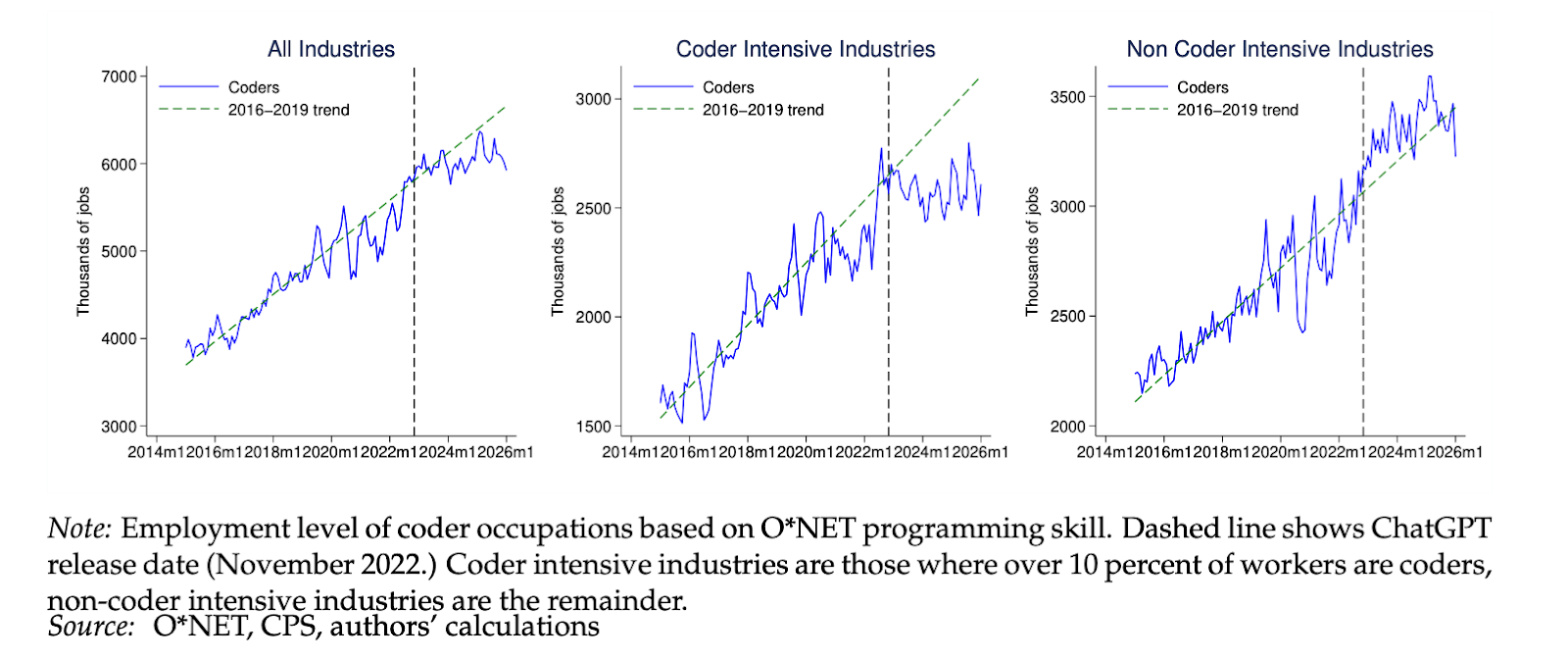
Research from the Federal Reserve finds that worries about AI have “been suppressing coder employment growth by (conservatively) about 3 percent per year since the introduction of ChatGPT.”
Slower growth is still growth:
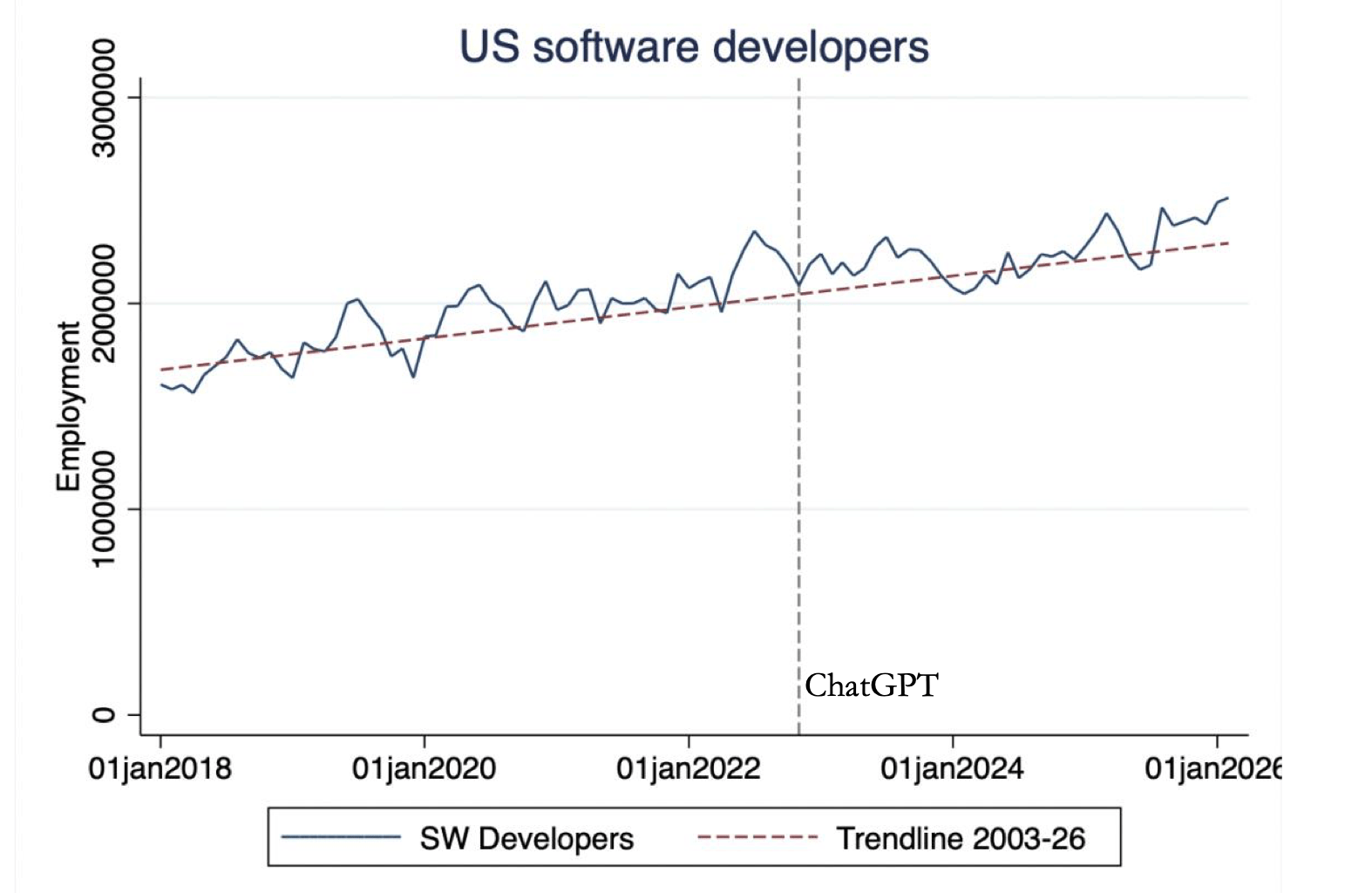
Another study concludes that “the number of software developers in the US has grown by over 400,000 since ChatGPT was introduced in 2022.”
Exponential growth:
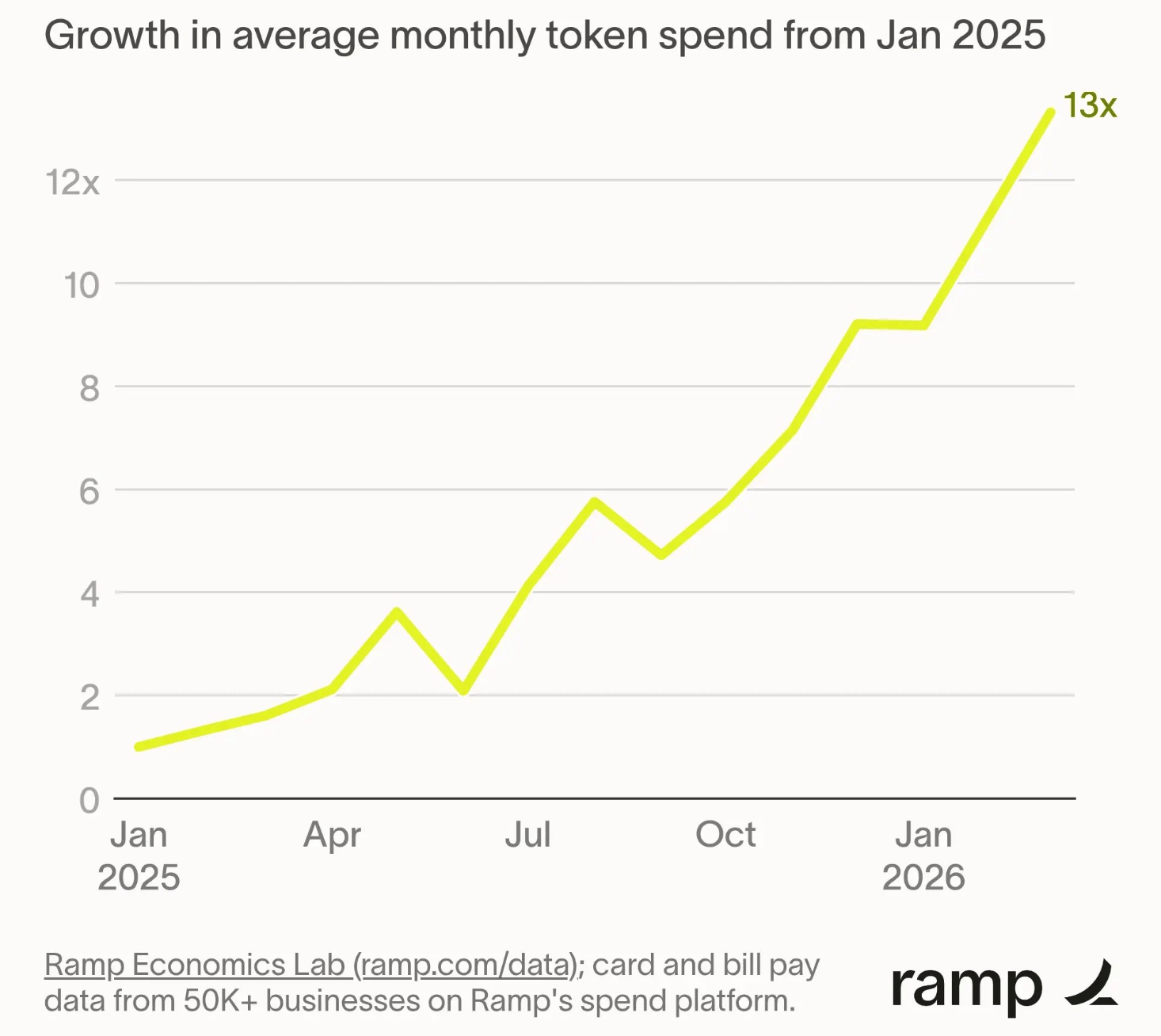
Data from Ramp shows that its customers’ spending on LLM tokens is up 13x from the start of the year (when agentic AI first took off).
The year of the token:
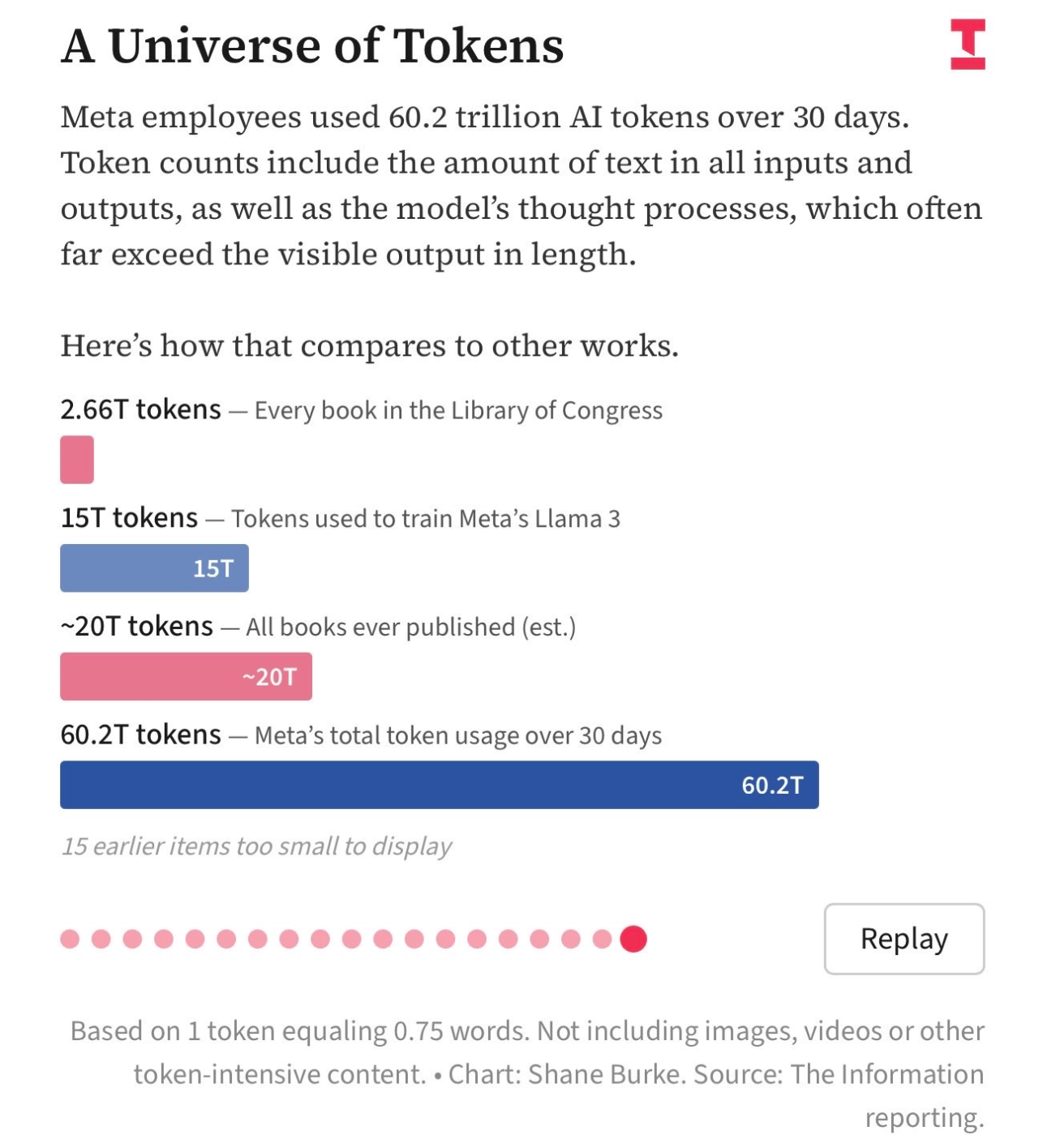
The Information puts the explosion of token consumption in perspective for us. All of the books ever published amount to 20 trillion tokens. Meta employees have burned 60 trillion tokens in just 30 days.
AI investment boom:
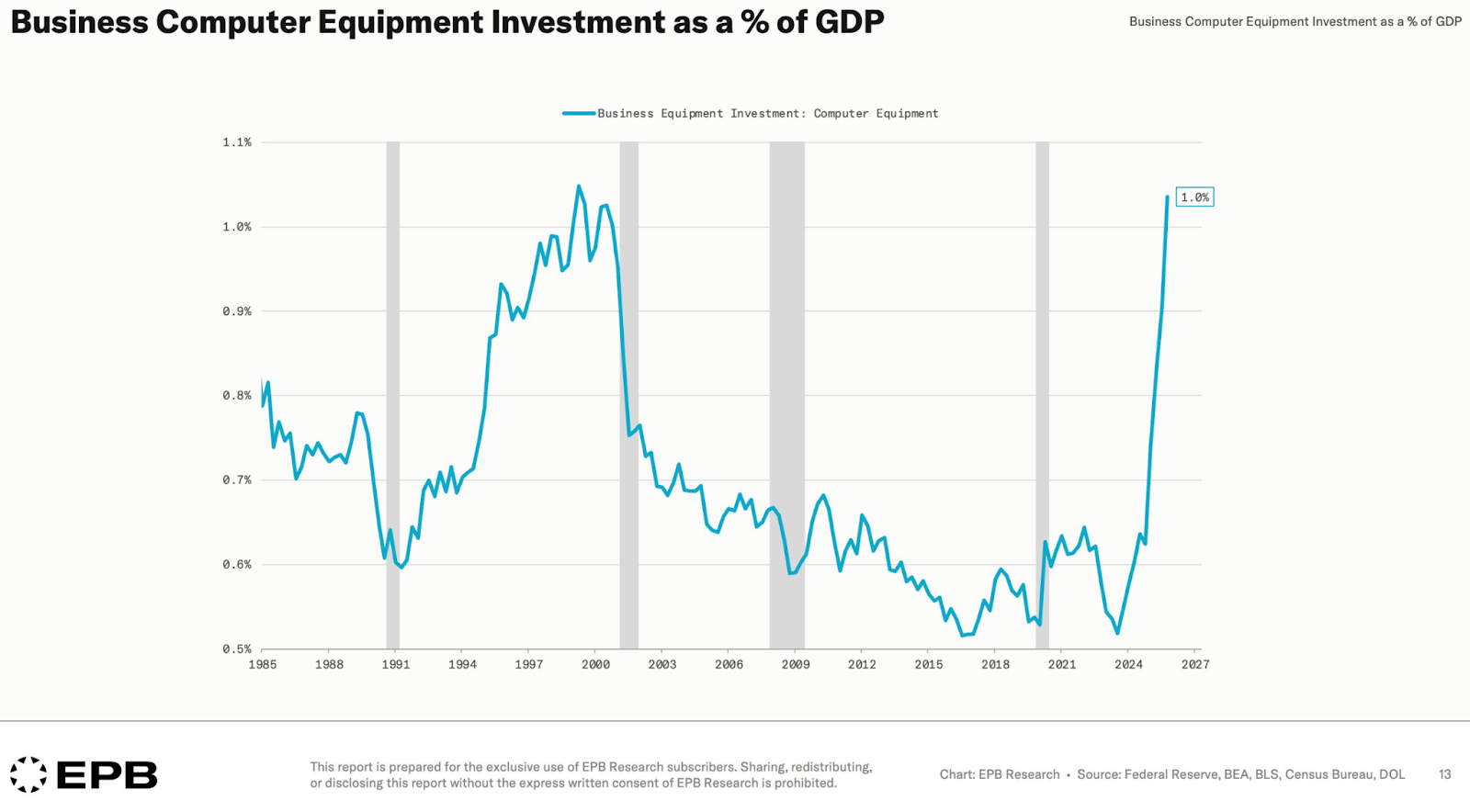
As a percentage of GDP, US business investment in “computer equipment” is approaching dotcom levels.
A potential worry:
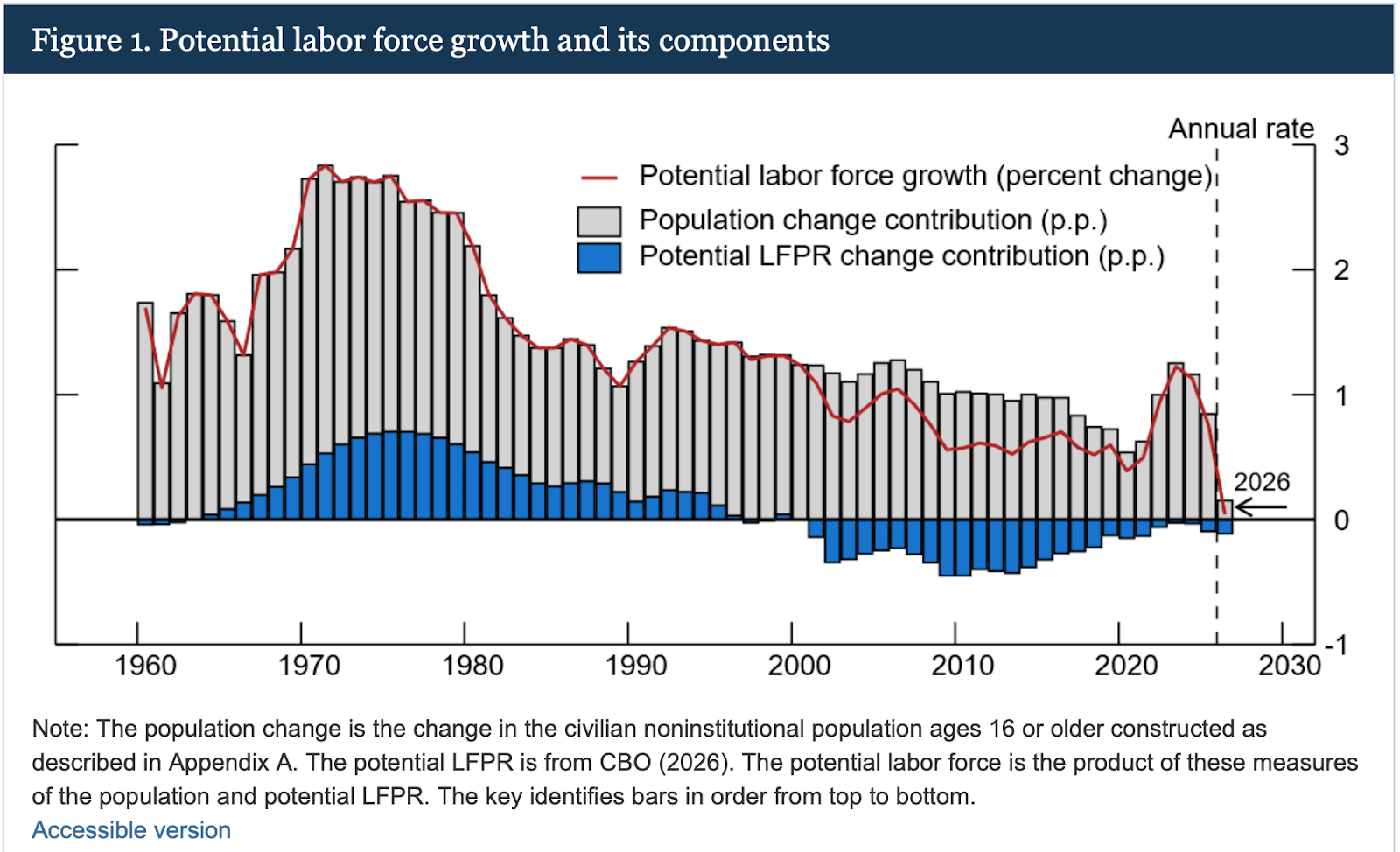
A new paper from the Fed estimates that the “potential labor force growth” has fallen to 0%. We spend a lot of time worrying about there being not enough jobs, but the real worry might be not enough workers.
The effect of worry?
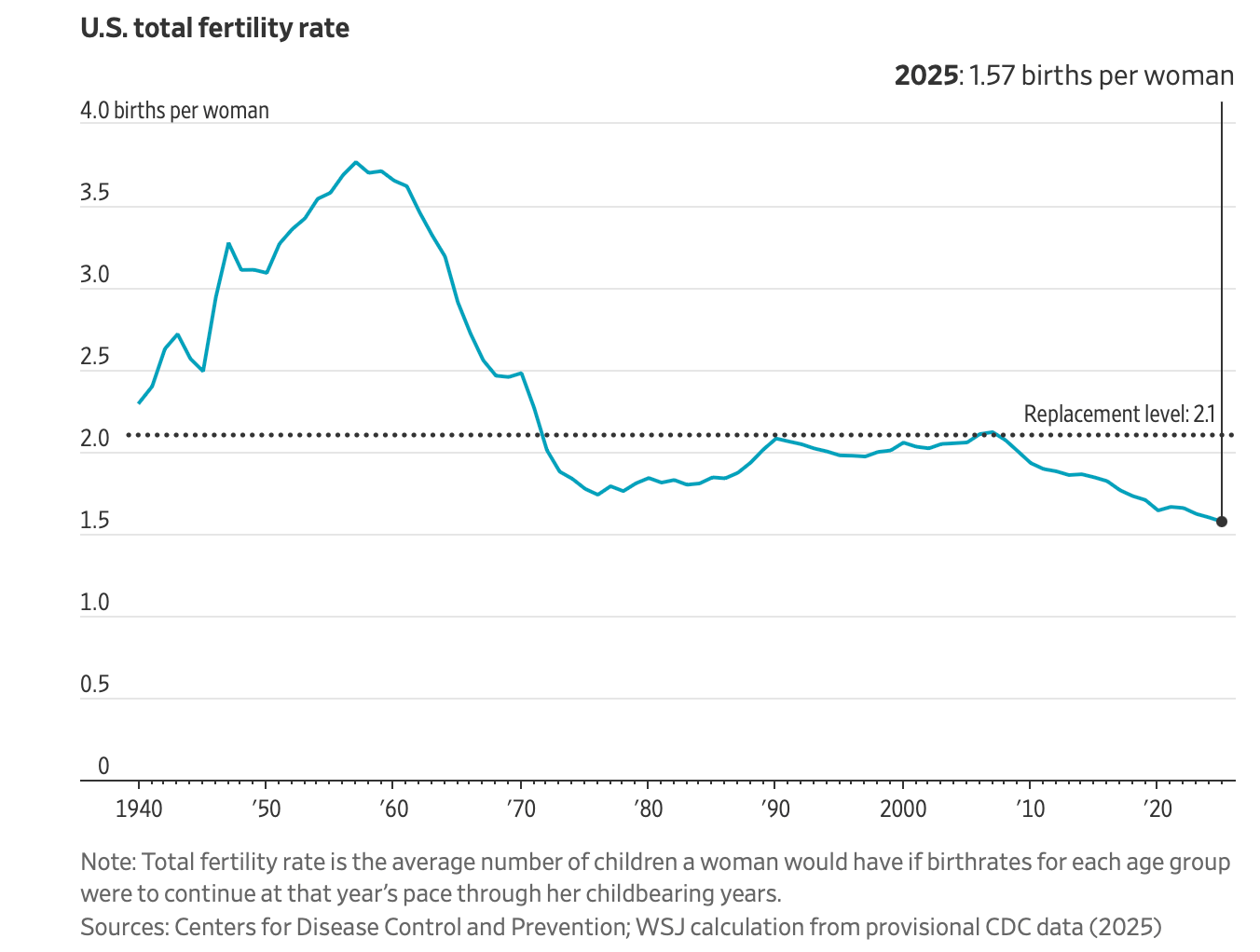
The Wall Street Journal attributes falling US fertility to “uncertainty about the future, including concern over finances, relationship stability and the political climate.”
Maybe we all need to read a little history.
Have a great weekend, worry-free readers.

Introducing Blockworks Investor Relations, an IR platform built for onchain businesses.
The latest Blockworks offering brings together analytics, a branded investor relations site, and integrated advisory support into a single platform. The result is a more efficient way to share your story, build trust with investors, and engage a global audience from day one.
Check out our cofounder Michael Ippolito's keynote at DAS NYC launching the new IR platform.