- The Breakdown
- Posts
- 🟪 Investor relations is shaping the future
🟪 Investor relations is shaping the future
The path to AGI has been paved by investor expectations

Byron Gilliam
April 14, 2026


Investor relations is shaping the future
In 2010, Demis Hassabis and Mustafa Suleyman pitched their AI startup DeepMind to “a strange kind of investment committee,” as Sebastian Mallaby describes in The Infinity Machine.
The angel investor David Gammon had said he was ready to invest. But he explained that, for final approval, the AI researchers would have to visit his home and pitch the investment to his wife and three sons as well.
His wife is an artist, and his sons were teenagers.
Gammon told Demis, “If you can’t explain this to my youngest son, Cameron” — in middle school at the time — “you’re not going to get his vote.”
The DeepMind co-founders were desperate enough for cash to go along with the unorthodox request. “If they refused to humor wacky investors,” Mallaby writes, “they might not raise any capital at all.”
They raised the capital — the Gammon family voted unanimously to invest — but Hassabis wasn’t enthused about spending his time that way.
“I couldn’t have got this off the ground without David Gammon,” he later told Mallaby. “But can you imagine going to pitch to a fourteen-year-old? I mean, I’m a serious scientist.”
Serious science is expensive.
Hassabis needed investors’ money to “solve intelligence,” as he later put it, which he proposed to do with a novel combination of reinforcement learning (trial and error) and deep learning (neural networks).
Hassabis had no thought of developing a product or service that might someday make a return for investors. It was a science experiment — and even scientists were skeptical. A prominent AI researcher told Hassabis his idea for solving intelligence was “just nonsense.”
But Hassabis was unusually persuasive.
“Demis had what we called his Jedi mind trick,” the AI researcher David Silver told Mallaby. “He would kind of be like, ‘You will believe the things I’m going to say,’ and then people did believe them.”
This helped Hassabis raise the money he needed to hire scientists and pay for office space. But the money was extraordinarily expensive.
In December 2010, Hassabis raised $2.3 million from Peter Thiel’s Founders Fund in return for nearly half of DeepMind.
For perspective, consider that DeepMind’s peers — OpenAI and Anthropic — are today worth nearly $1 trillion each. But in 2010, Mallaby explains, “there was no other capital available.” So $2.3 million bought you half of DeepMind.
As DeepMind progressed, Hassabis needed more and more capital — and therefore a better story to help raise it.
He found one in vintage Atari games.
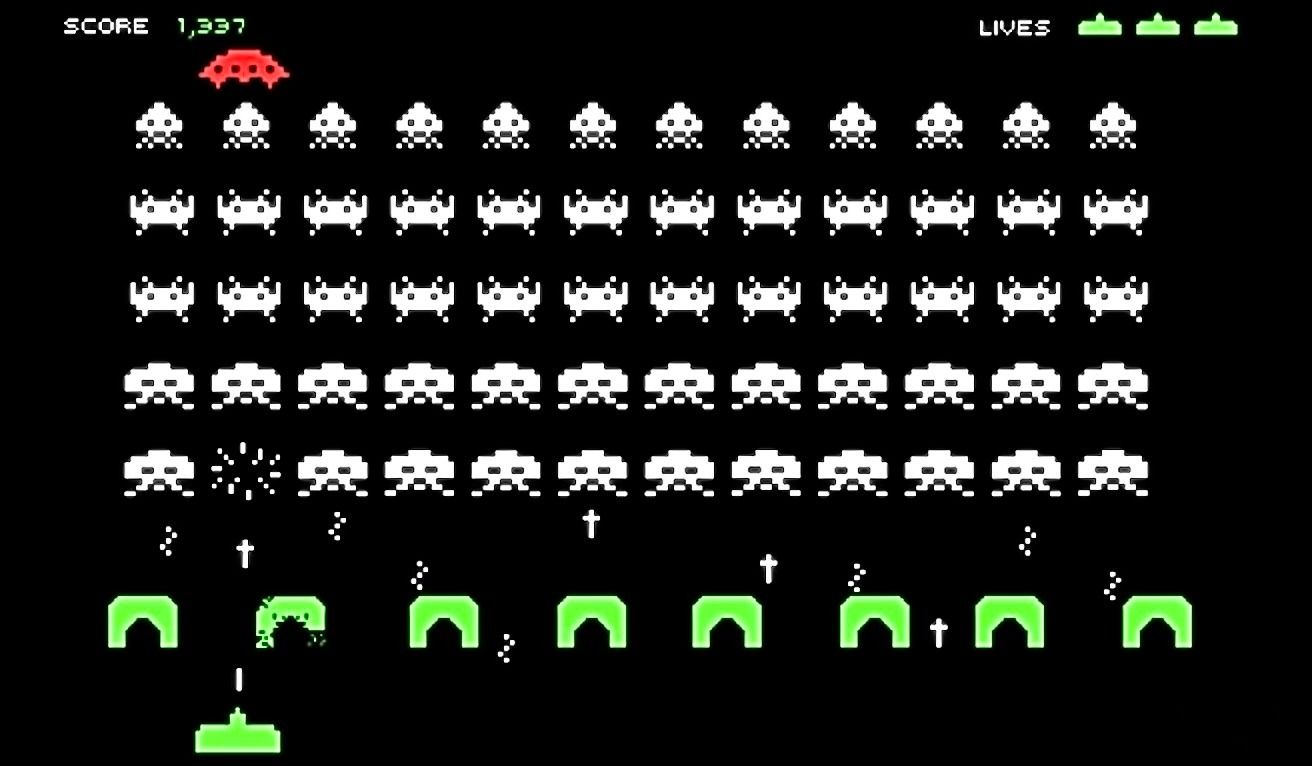
By 2013, Hassabis had focused DeepMind’s mission on teaching AIs to play Atari classics like Pong, Breakout, and Space Invaders without giving them the rules.
It was good science: determining whether AI could learn by putting it in a self-contained world with only pixels as input and score as feedback.
It was good marketing, too. “DeepMind’s potential investors had grown up playing Atari,” Mallaby explains, so an AI system that mastered games like Space Invaders “would be instantly appealing” to them.
This became the primary selling point for DeepMind’s Series C, which Hassabis was counting on to raise $65 million. The round was nearly complete when the anchor investor — Thiel’s Founders Fund — reneged on a promise to invest $10 million. Hassabis successfully scrambled to find an investor to replace Thiel, but only at the last second. DeepMind came close to missing payroll.
“That was deeply scary,” Hassabis told Mallaby. “Getting close to a situation where you’re going to run out of money.”
The experience made Hassabis revisit a possible solution to his money problems that had recently landed in his inbox: “Sorry to send you an email out of the blue,” the fateful message began. “My name is Alan Eustace and I work for Larry Page at Google.”
Eustace had been tasked with assembling a “set of teams” to work on AI. “Larry sent me your name this morning as one of the people he believes is doing revolutionary work in the area,” the unsolicited email continued. “I wonder if you have time to talk.”
He made time.
“I was having these inane conversations nonstop with investors,” Hassabis told Mallaby. “I felt my brain was atrophying.”
Google offered to free Hassabis of those conversations and let him get back to doing the research that he loved. Page told Hassabis he could either spend his career attempting to build something like Google, or join Google and use its resources to build AGI.
“I thought that was a pretty good argument,” Hassabis said.
“I was fed up with scrambling around, trying to justify what I knew was the biggest thing of all time,” he added. “I just thought, look, I’ll go to Google. I’ll get a shitload of computers and then I’ll solve intelligence.”
After an Atari demonstration and some drawn-out negotiations over price, that’s pretty much what happened. Google acquired DeepMind for $650 million.
That netted a life-changing $136 million for Hassabis. More importantly, it put Google’s balance sheet behind his AI dreams.
“Not long after the Google acquisition,” Mallaby notes, “DeepMind was paying $260 million in staff costs annually” — far more than Hassabis would have been able to raise on his own.
No longer would he have to pitch his ideas to teenagers. “His fundraising ordeal was over,” Mallaby wrote.
But everyone else’s fundraising was just getting started. Google’s acquisition of DeepMind set off a domino effect of AI investments that’s currently changing the world.
OpenAI was founded by investors who didn’t want Google to get to AGI first. Later, Dario Amodei and other OpenAI employees left to found Anthropic over concerns that investor demands were undermining OpenAI’s original focus on safety. Now, Anthropic is becoming more commercial to attract the capital it needs to eclipse OpenAI.
So it’s not too much of an exaggeration to say the dynamics of investor relations have shaped the future of…everything.
PS: For a glimpse of how investor relations is changing the future of crypto, have a look at Solana’s Q1 tokenholder report, released this morning.

Introducing Blockworks Investor Relations, an IR platform built for onchain businesses.
The latest Blockworks offering brings together analytics, a branded investor relations site, and integrated advisory support into a single platform. The result is a more efficient way to share your story, build trust with investors, and engage a global audience from day one.
Check out our cofounder Michael Ippolito's keynote at DAS NYC launching the new IR platform.

