- The Breakdown
- Posts
- 🟪 Prediction markets are AIs


Prediction markets are AIs
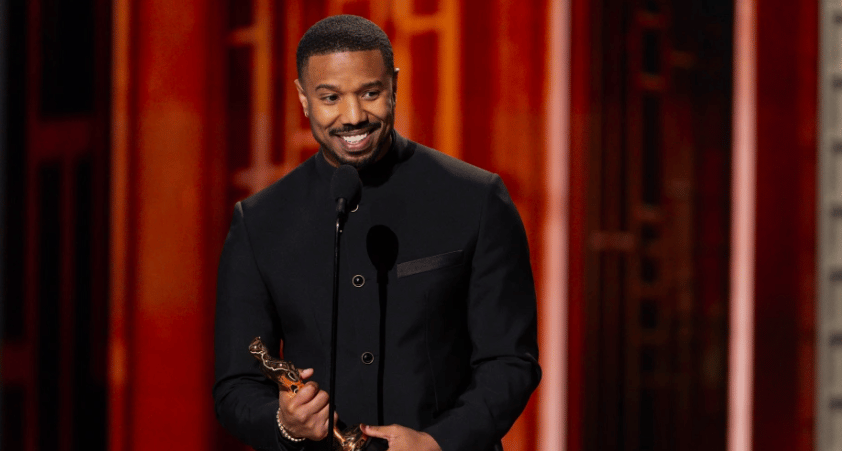
Prediction-market traders kept placing bets on last night’s biggest prize right up until the moment the envelope was opened: And the Oscar for best actor goes to....
But the outcome they were betting on had long been decided: Voting for the Oscars had closed ten days earlier.
This is not how we usually think of prediction markets — because what’s it even mean to “predict” something that’s already happened?
Predicting the Oscars is different from predicting, say, a sporting event. When Polymarket assigns Michigan a 19% chance of winning the NCAA tournament, it means that if the tournament were replayed 100 times, we could expect Michigan to take the trophy 19 times.
In that case, the market is assessing a probabilistic event.
No matter how many times you reran last night’s Oscars, however, there was only going to be one outcome for best actor — because the outcome was decided on March 5th.
The betting that took place over the 10 days thereafter was a process of aggregating fragments of information about a fixed but hidden outcome.
The market was assessing a deterministic event.
It worked!
Prediction markets were right about the best actor award and — importantly — they got more right with time.
On March 6th, Timothée Chalamet was the favorite at 54%, versus Michael B. Jordan at just 38%.
On March 7th, the odds flipped in Jordan’s favor, even though nothing had changed since the votes were cast.
At 3 p.m. yesterday, Jordan’s odds had edged up to 55% and the market continued to trend in his favor even as celebrities posed for paparazzi on the red carpet.
At 10:20 p.m., a moment before he heard his name called, Jordan’s odds hit a new high of 62%.

That is how prediction markets are supposed to work: Probabilities should get more accurate as an event approaches — like the laws of entropy narrowing the scope of possibility.
But, in this case, Oscar betters were performing price discovery on something that had already happened; predicting the past, so to speak.
From that perspective, prediction markets start looking a lot like AI-learning machines — and AI learning machines start looking a lot like prediction markets.
This isn’t just metaphor.
In a recent blog post, researchers at Gensyn explain that prediction markets and the learning algorithms behind modern AI are “formally equivalent in a strong sense”: Both are systems for compressing fragmented information into probabilities.
In a prediction market, each new trade pushes the odds a little closer to the truth, just as each new piece of training data pushes an AI model’s predictions a little closer to generating the correct answer.
In other words, they learn the same way: by adjusting probabilities in response to new information.
This teaches us something about prediction markets: “[P]rediction markets can be reinterpreted as online learning algorithms,” Gensyn explains.
They’re more than “wisdom-of-crowds” forecasting machines; they’re learning machines, too.
There’s also something to learn about AI here: “Learning algorithms,” Gensyn adds, “can be implemented directly as markets.”
Gensyn cites research on training AIs with “a market-based framework that treats each training example as a tradeable contract” — just like the contracts traded in prediction markets.
Other research makes the comparison even more explicit by using “artificial prediction markets” to improve model training.
Gensyn says all this makes prediction markets resemble “online learning algorithms” — a reference (I think) to the recommendation systems that Netflix uses to learn what movies to show you, and which Spotify uses to learn what songs to play for you next.
Prediction markets should continually get more accurate in the same way these models do. Where AI models improve their recommendations by adjusting their weights based on results, prediction markets improve their probabilities by reallocating money from losing bettors to winning ones.
The traders who bet on Michael B. Jordan will have more money to bet on next year’s Oscars, which should make next year’s probabilities even more accurate than this year’s.
The markets for best actress and best director could not, however, get any better — they were near 100% for the winners long before the ceremony started.
That suggests prediction markets weren’t really estimating probabilities in the way we usually think of it. Instead, they were converging on an already-decided but still-hidden truth.
That’s more than just “the wisdom of the crowds” — it’s a learning algorithm, learning in real-time.

Brought to you by:

Sablier is infrastructure for token distribution and money streaming. Vest tokens, run airdrops, and stream payments onchain, all with customizable unlock schedules.
530,000+ streams created. 6+ years without hacks. Used by Ethena, Uniswap DAO, and Fluid.
Start streaming at sablier.com.

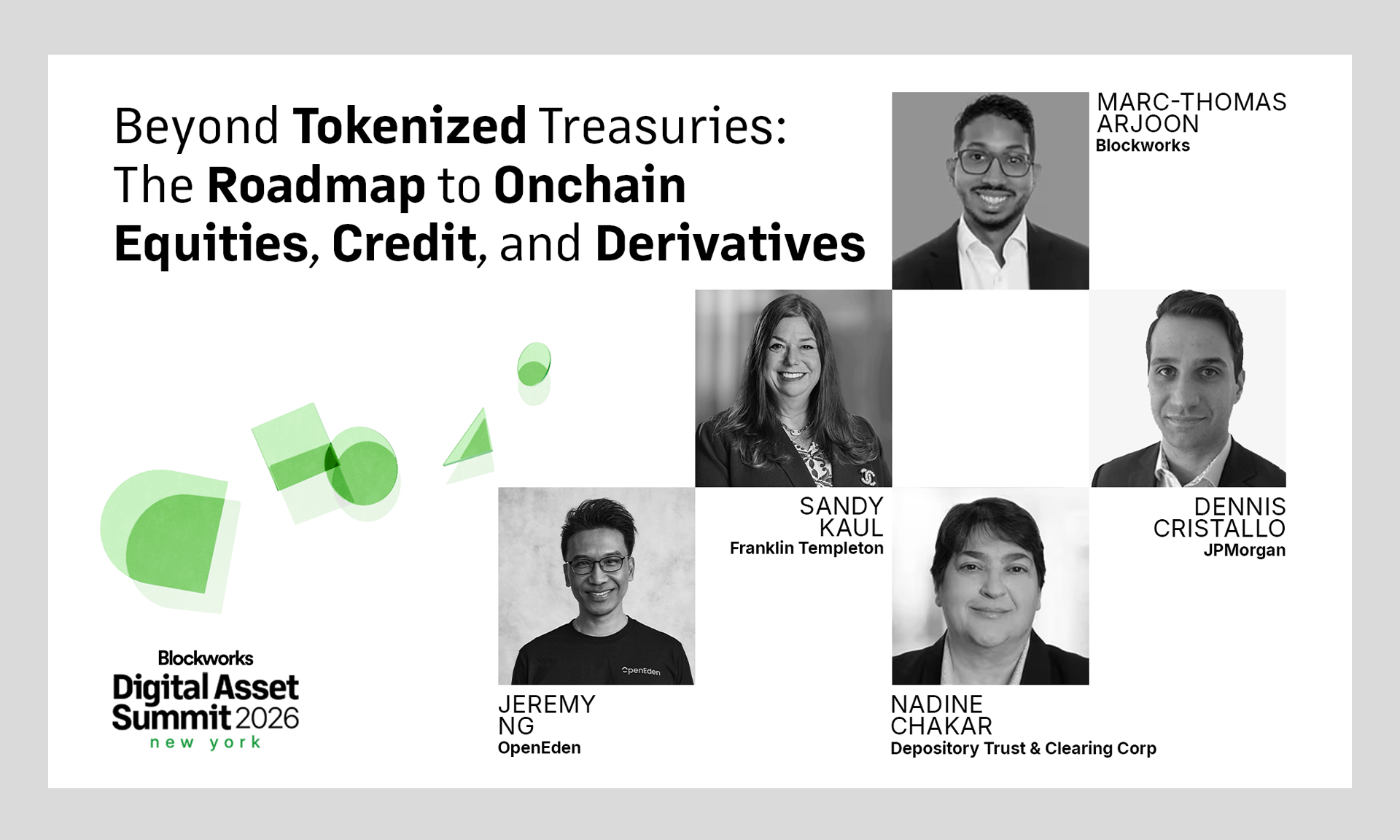
DAS NYC's lineup is bringing the biggest names in finance to the stage.
Don't miss the institutional gathering of the year — this March 24−26.

