- The Breakdown
- Posts
- 🟪 The anti-myth of Coca-Cola’s Santa




The anti-myth of Coca-Cola’s Santa
Santa wasn't always a big jolly guy in a red suit.
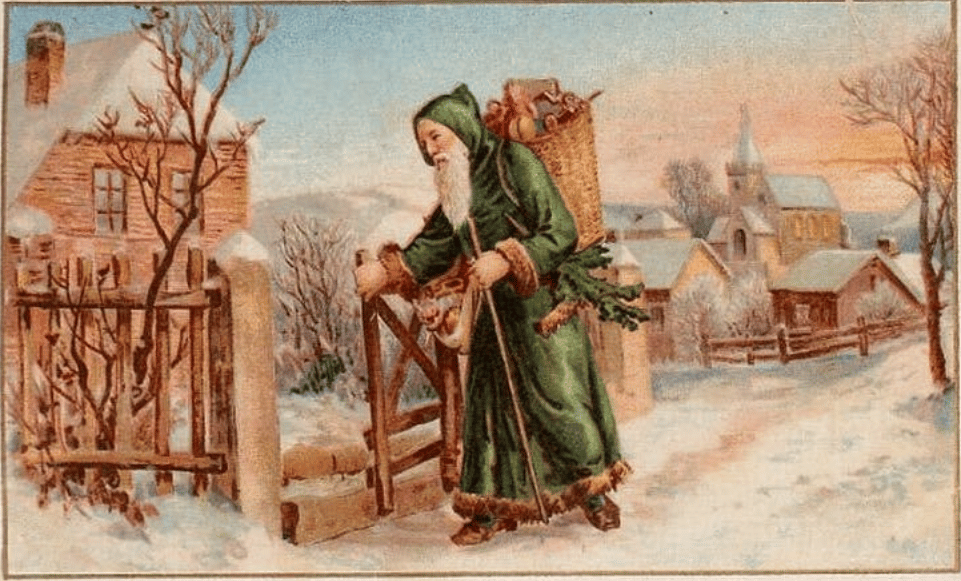
In Victorian England, Father Christmas often wore green, likely influenced by pre-Christian traditions of a holly-adorned figure symbolizing winter renewal.
Sometimes he appeared as a tall and skinny nomad:
He was also commonly depicted in earthy tones like brown — a practical choice for someone who enters houses via chimneys:
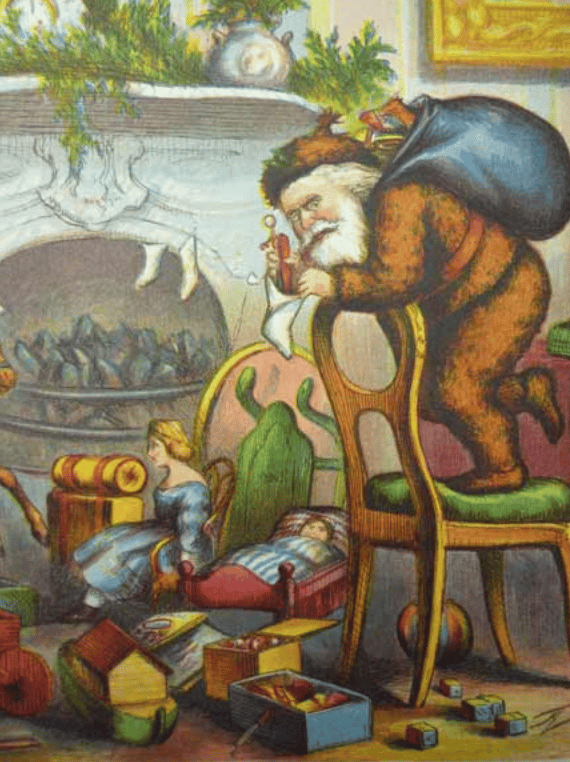
19th-century Santas were often diminutive — likely because he was described as an “elf” in the poem ‘Twas the Night Before Christmas:

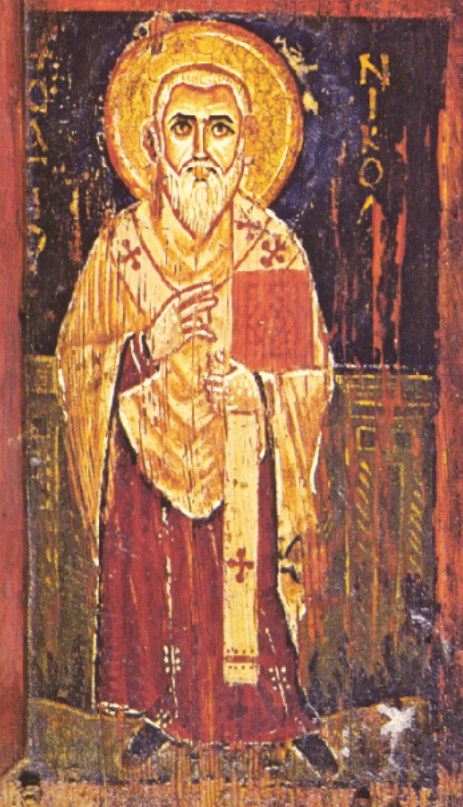
Santa’s original color may have been red. The historical Saint Nicolas was typically depicted wearing ecclesiastical robes of red and white:
But it was only in the late 19th century that Santa Claus became fully associated with his red robes, thanks to the work of the Harper’s Weekly illustrator, Thomas Nast. Look at this one from 1861:
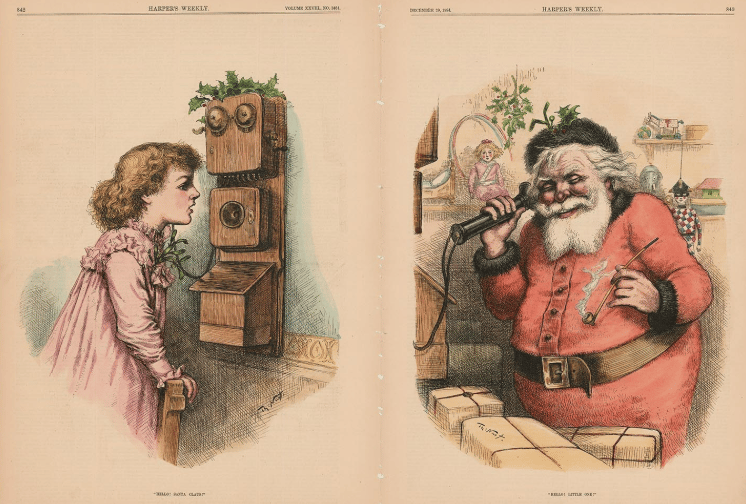
Nast’s illustrations established Santa as red-robed, white bearded and portly. So when Haddon Sundblom began drawing Santa Claus for Coca-Cola advertisements in the 1930s, his version was only an evolution of established ideas.

Sundblum is sometimes credited with conceiving the modern Santa, but his biggest contribution was perhaps making his suit a brighter shade of Coca-Cola red.
The company’s ubiquitous advertising campaigns then cemented the imagery.
Undoubtedly, Coca-Cola popularized and standardized Santa’s look — and perhaps still profits from a subliminal link between the brand's signature red and the holiday season.
Coca-Cola did not, however, invent the modern image of Santa.
But I probably don’t have to tell you that.
I began this newsletter with the intention of debunking the idea that the modern Santa Claus was created by Coca-Cola — and then finding some kind of investing lesson in that misconception.
But extensive internet searching suggests there is no misconception to correct. There are countless articles debunking the myth that Coca-Cola created Santa, but hardly any instances of the myth itself.
My conclusion is therefore that the idea that people believe Coca-Cola created the modern Santa is itself a myth — an anti-myth that now exists primarily to be refuted, and sustained by the very act of debunking it.
I’m certain there’s a lesson in that somewhere: how second-order narratives can eclipse first-order reality or something.
But even ever-curious newsletter readers don’t need to think that hard on Christmas Day.
So there are no investing lessons in today’s edition — just some colorful pictures to brighten things up.
Happy holidays.


How are DeFi and traditional rails actually converging?
Watch the Roundtable recording to hear voices from Blockdaemon, Aave, and Circle hash it out!

Brought to you by:

You’re only as decentralized as your weakest link. When data serving relies on centralized infrastructure, apps stall, streams break, and users feel it immediately.
Shelby is decentralized hot storage for read-heavy, real-time workloads like streaming, AI inference, and dynamic content. It’s coordinated on Aptos for speed, while remaining chain-agnostic by design.
The Shelby devnet is live with APIs, a CLI, and SDKs, including new React and Solana kits.

