- The Breakdown
- Posts
- 🟪 Thursday links
🟪 Thursday links
Basketball, causation, swarm intelligence, and a new elevator pitch

Byron Gilliam
March 19, 2026

Thursday links: Basketball, causation, swarm intelligence, and a new elevator pitch
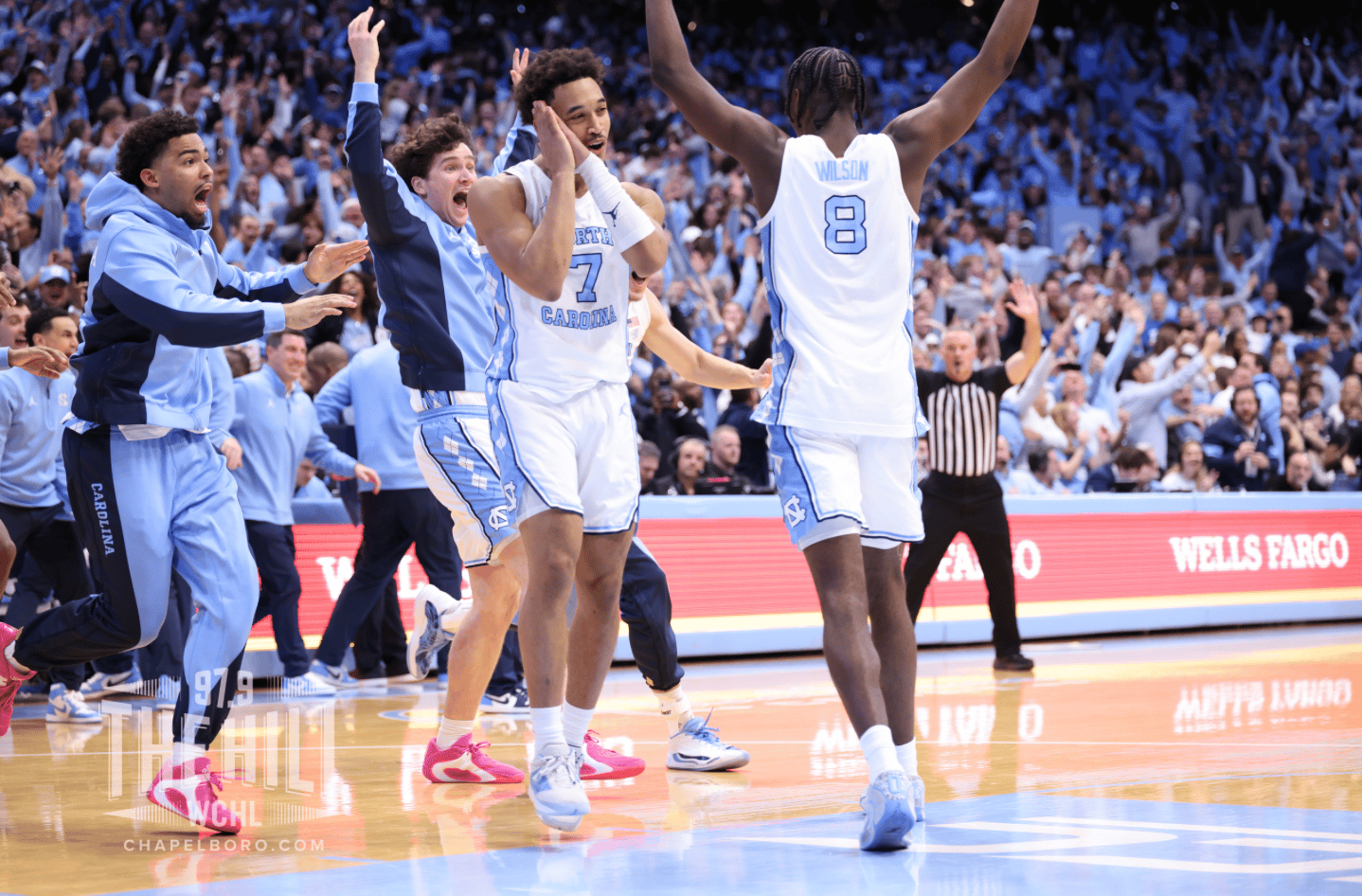
Economist Michael Munger uses the UNC-Duke rivalry to illustrate the economic principle that “nothing’s free if people want it.”
We typically think of cost strictly in dollar terms. But when demand exceeds supply, costs go up — even if prices do not.
When, for example, the demand for Starbucks coffee exceeds supply, one thing to do would be to raise prices.
Another is to make people wait.
The price of a grande caramel macchiato is always $6.25. But during rush hour, the all-in cost becomes $6.25 plus a 20-minute wait in line (and maybe being late for work, again).
This is surge pricing, like Uber. The surcharge just isn’t in dollars.
Duke basketball takes this logic to a comical extreme.
Tickets to the annual UNC game are “free” for Duke students. But Duke plays basketball in “a tiny little high school gym,” as Munger describes it. So demand always far exceeds supply.
Like Starbucks, Duke solves this not by raising prices, but by making the students line up.
In tents. For six weeks.
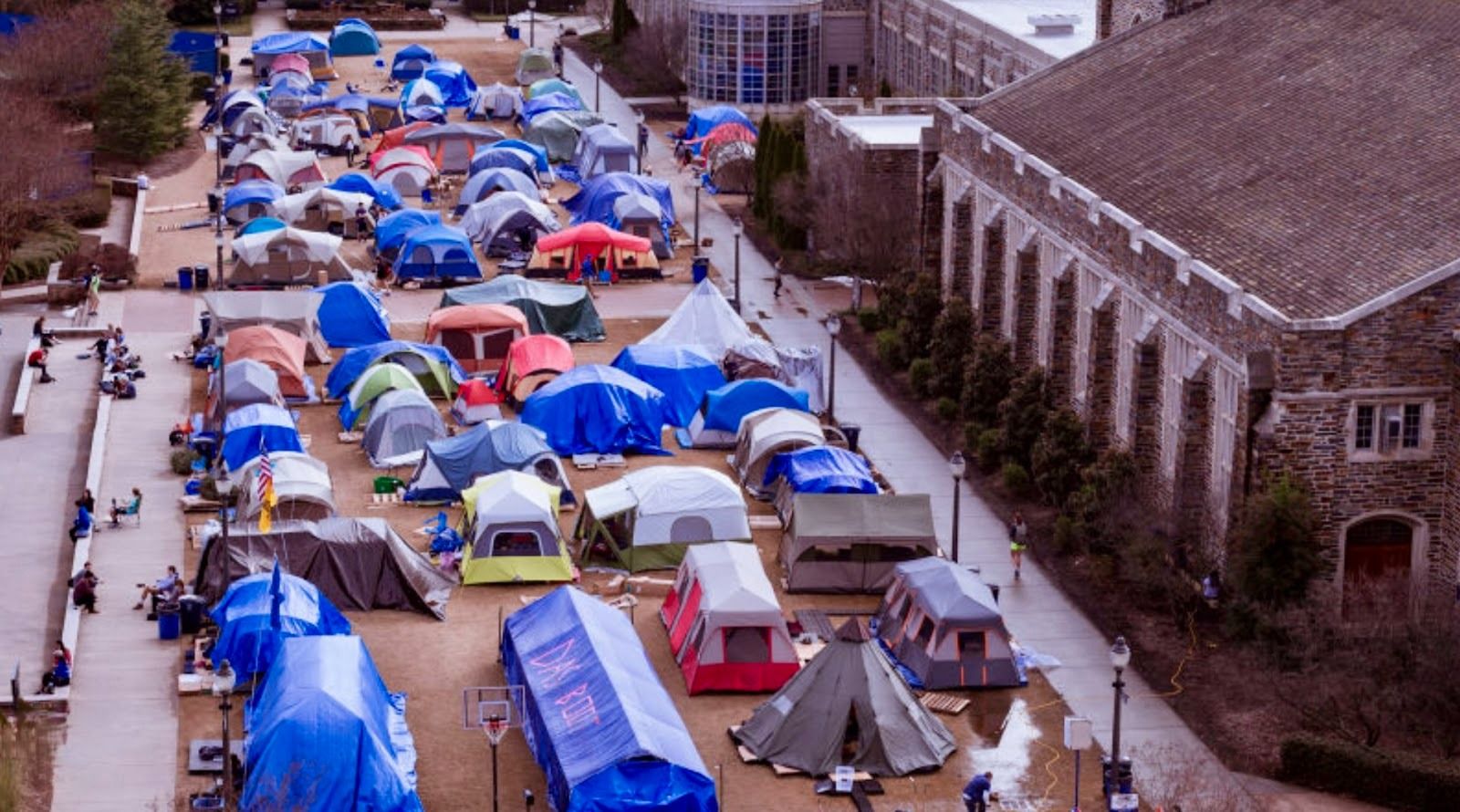
The tent encampment known as Krzyzewskiville (named after the second-best basketball coach in college history) is “like Burning Man,” Munger says. “It has a set of rules. It has a police force. It has an appeals process.”
It has a student-written constitution that’s 44 pages long.
But even all that’s not enough to bring demand back in line with supply. So there’s also an “ordering test” to decide who gets the very best seats.
Questions include minutiae like, “Which player scored the 67th point in the game vs. Texas Tech? [4 pts].”
Does this system make sense? Forcing Duke students to spend weeks in tents studying arcane basketball trivia seems like a deadweight loss — “the name that economists give to the resources that are wasted in competing for a rent.”
The scarce resource of students’ time might be better spent in the library learning how to make airplanes lighter or something.
But it does make sense for the University: Munger says the students who tent “are far more likely to give large amounts of money [to the University] for a very long time.”
“This is how we train fighter pilots, elite military units, and Duke basketball fans,” Munger adds. “In all three cases, it is the severity of the initiation that creates a sense of solidarity and belonging.”
OK, sure. But you could also just go to a state school.
UNC allocates its basketball tickets by lottery.
Munger adds that “the average GPA is higher for people who tent,” which immediately felt like correlation, not causation. How does six weeks in a tent make anyone smarter? It might just be that smarter kids are more likely to be basketball fanatics. But it might also be that there’s not much to do in the tents other than study.
Or is it both?
“We treat causation and correlation as if it’s binary, like a coin flip this way or that way,” computer scientist Tina Eliassi-Rad explains. “But that is really not the case. It’s more of a spectrum and so if you have a model that is producing robust predictions, there is some underlying causal model. You just don't know it.”
Huh. That seems like a useful way to rethink…pretty much everything!
If you’re planning to wager on March Madness today, know that swarms of AI agents have already predicted how you’ll bet.
The latest in prediction science is MiroFish, an “open source swarm intelligence engine” that deploys thousands of AIs to simulate how people will trade on news or bet on an event.
Like a basketball game: One such swarm made $1.4 million betting on NBA games.
The model deployed 4,096 agents with different categories of personalities — fans, professional bettors, oddsmakers, analysts. MiroFish agents are fed data on some event, and then instructed to debate among themselves until they converge on a probability.
(The agents “freely interact and socially evolve,” as the docs explain it.)
When that probability differs from betting odds, there may be an opportunity to trade — either against the crowd or in anticipation of where the crowd will end up.
This is Keynes’ beauty contest, now run by AI.
Most prediction models try to estimate the true probability of an outcome. A swarm like MiroFish tries to predict what the market will believe that probability to be.
In other words, it’s attempting to build a better crowd.
The swarm predicting basketball odds has been placing its bets on Polymarket, so we can see that, for today’s games, it’s betting on Louisville to prevail over South Florida and taking the under in Idaho v. Houston.
It’ll be fun to follow how it does, because college basketball is notoriously difficult to predict — who’d have imagined Siena leading Duke by 11 at the half this afternoon?
But the real test will be whether a swarm engine can anticipate where the crowd will end up.
This is how professional sports bettors measure themselves — not by how often they win, but by whether they beat the closing odds.
If swarms really are a better kind of crowd, that will get harder and harder to do.
“There are only two ways to onboard to crypto,” Multicoin writes, “you buy in or you earn in.”
Crypto has struggled with the former — few beyond the truest believers and most degenerate speculators have been willing to move their fiat onchain.
But Multicoin predicts that 1) AI will break jobs into smaller and smaller “units of work” and 2) crypto will be the best way for employers to pay for it.
This, they say, will create the Internet Labor Market: “a contributor-owned marketplace where the unit of work is a verifiable task, settled instantly over crypto rails.”
Exactly what those tasks will be remains to be seen, but Multicoin is optimistic: “Human labor will flourish, because AI dramatically increases individual leverage and expands the feasible problem set.”
For crypto, the most optimistic part is what follows: “Earnings will become balances, balances will become savings, and savings will become new participation in Internet Capital Markets.”
Internet Capital Markets (aka DeFi) is what got me interested in crypto in the first place. But even I don’t use them much, because moving dollars out of a brokerage account — just to get an extra point or two of yield onchain — still gives me the heebie-jeebies.
But if that’s where my money starts out, moving it offchain to get a point or two less of yield would feel even weirder.
Also, if everyone gets paid onchain, it won’t be long before spending onchain is much easier, too.
Crypto has been in need of new hope, and this seems like a good one: It’s the old hope of bypassing the banking system entirely by both earning and spending onchain.
Alternatively, you could use your remaining crypto to bet on college basketball.
Go Heels!

Brought to you by:

Sablier is infrastructure for token distribution and money streaming. Vest tokens, run airdrops, and stream payments onchain, all with customizable unlock schedules.
530,000+ streams created. 6+ years without hacks. Used by Ethena, Uniswap DAO, and Fluid.
Start streaming at sablier.com.

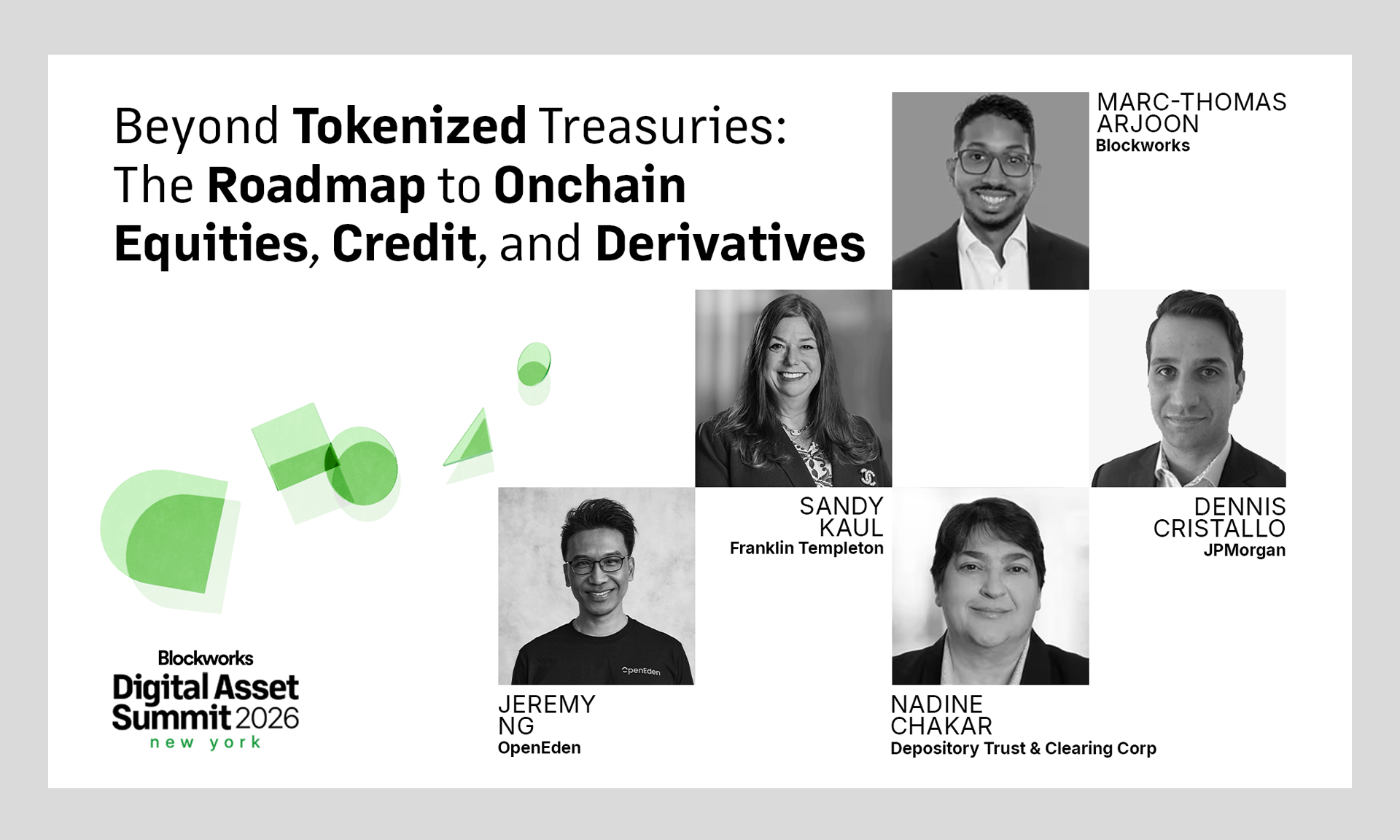
DAS NYC's lineup is bringing the biggest names in finance to the stage.
Don't miss the institutional gathering of the year — this March 24−26.